Club News

Museum Art Photography

by Joseph T Sinclair

Some people look down on photographs that are merely pictures of other people’s art. This may seem a reasonable point of view, but like any other tenant of artistic evaluation it’s not necessarily fair. In the following paragraphs I will give you some ideas of how you might incorporate photographs of museum art into a portion of your portfolio.

A curator for a museum, famous or obscure, is faced with certain limitations. One limitation is history. He or she has to have a minor if not major collection of historical interest, or the collection is at risk of being deemed irrelevant. This tends to compromise aesthetic value for the sake of historical value.

Another consideration is cost. Not every museum can afford to spend $75 million for a Picasso. In fact, if you’re a curator with a $75 million budget, you would probably spend it on a wide variety of lower value art rather than one Picasso. So just like a private individual, a curator cannot always have what he or she wants but must compromise due to cost.

By photographing just certain art in a particular museum (cherry picking), you can acquire a collection with high aesthetic appeal and leave out the riffraff of historical interest or low value. Or if you’re an art historian, you can do the opposite.

Condition is another consideration. Paintings accumulates a patina of various elements from the atmosphere over time. That time is shorter in the tropic zone than in the temperate zone. A painting acquired by a museum may not be in prime condition. That means its colors and allure are clouded with the grunge of decades, maybe centuries. And the museum may not be able to afford to restore it.

Restoration is important for aesthetics. Large museums restore their most valuable paintings periodically. That might be every 50 years, every 100 years, or every 250 years. A restoration can be very expensive costing hundreds of thousands of dollars. Small museums can’t afford them often, and even large museums can only afford them for a portion of their collections.

By using Photoshop adroitly, you can restore art via a photograph to its original allure in many cases, and you can often do it quickly with a minimal effort. Thus, with some postprocessing, you can improve museum art for your own collection.

restore1restore2

This example of digital restoration was done in less than two minutes in Photoshop. It’s not perfect because it has some inherent restoration problems. But with a half-hour of work in Photoshop, it could be significantly higher quality while keeping the artistic integrity intact.

In addition, it’s sad to say (and most people may disagree with me) that many original paintings and prints by great artists have less aesthetic value than their reproductions. It doesn’t matter whether the reproductions are color prints or digital media. If you’ve ever visited an art museum shop and viewed the posters and books, you know what I mean.

Another issue is lighting. Lighting in museums is always a big problem and is never perfect. Paintings reflect light in strange and often undesirable ways that apparently cannot be corrected. And where you stand in relation to the art also determines how you see it. Reflections are a major problem. Indeed, a painting that appears superb in one museum or one museum room if moved to another may show in a less appealing way.

If you can photograph art without the ambient reflections, you can acquire a personal art collection that’s an improvement over what people see in the museum. This is very difficult to do, however, and sometimes impossible without the cooperation of the museum.

Beyond photographing art there is the particular activity of photographing portions of other people’s art and incorporating such portions into artistic creations of your own. A painting or sculpture seems to be a self-contained entity that one would not have an inclination to break up into portions for use in another artistic creation. But not all art is necessarily self-contained. For instance, a portion of a sculpture that’s part of antique fireplace mantle might be exactly what you need to display on a metal print by itself or incorporate into some type of other artistic creation such as a poster, advertisement, or collage.

mantle
I have used this photograph (part of an antique mantle) in a poster.

All things considered, photographing paintings, prints, and other works of art has many practical uses and can even be profitable. Here are a few ideas:

  • Curate your own wonderful collection (digital)
  • Make accurate prints
  • Make altered prints (e.g., restoration)
  • Use in another artistic creation
  • Use for illustration (e.g., in text)
  • Use in posters
  • Incorporate into everyday artifacts (e.g., business cards)
  • Sell some of the above

For fun, I’ve used the following museum portraits as my personal photograph in Facebook from time to time:

jts
Through careful selection I found several works of art that show a close resemblance to me.

Fortunately, most museums permit photographing. Unfortunately, modern art is copyrighted going back to the 1930s. So, you have to be careful what you photograph and how you use it. You don’t want to violate a copyright. Nonetheless, if the museum owns the copyright and allows photographs, you’re probably safe.

But what about artists? What might they think about people photographing their art without compensation to them? Well, Rembrandt painted pictures that he knew would only be viewed in a patron’s home. At best his art might be on view in some public building, where several thousand people at most might see it over the decades. How would Rembrandt feel if he knew that one day two billion people would view and enjoy his art in the privacy of their own smart phones, tablets, or computers. I for one will speculate that he would likely feel much more fulfilled as an artist than he was in his own time knocking out aesthetic knickknacks for the rich.

Photographing paintings, prints, and even sculpture in a museum is a learned craft, not a happenstance snapshot. That is, it does take some skill. And oddly enough, your photographs of other people’s art are copyrightable. There dozens of ways to take photographs of other people’s art, and therefore the method you use and the resulting product is copyrightable. The law recognizes that photographing art is not necessarily a copycat endeavor.

So, photographing art in museums as well as art in other places in the physical world is a perfectly legitimate photographic endeavor whether used for one’s own collection, to share with friends and family, to create additional art, or to make a profit.

window
A stained glass window in the Louvre, one of my favorites. Backlit stained glass almost always makes an attractive photo.

Your Photographer Name

by Joseph T Sinclair

I wrote about naming your photographs, but I neglected to advise on how to use your own name. You need to change it to fit the situation. This idea encompasses much more than this writing can cover, because an artist can use an “brush name” just like a writer uses a “pen name.” That opens a lot of possibilities. But in this writing I will confine my comments just to using variations on your own name.

Here are some examples using my name, Joseph Sinclair:

Jose Santa Clara – use for quasi-Mexican, quasi-Spanish, or Southwest US situations (e.g., exhibits)

Joseph de Sancto Claro – use for quasi-French or elegant situations (e.g., museums)

Joseph Santo Clare – use for quasi-Italian or romantic situations

Joseph St. Clair – use in England

Joseph Sinclair – use in Scotland, Canada, and the Southeast US

Joe Sinclair – use in situations where you’re dealing with half-wits or good ol’ boys

Джозеф святой Клэр – use when dealing with the Russians

Just type English [whatever language] into Google, and you’ll get the Google translator. Then translate your name.

If you’re building a brand, switching names doesn’t work well, of course. But it’s difficult for one person to build a brand. So, why not change the ambiance of your name to fit a particular market or clientele?

When selling photos in Santa Fe, why be Joseph Sinclair when I can be Jose Santa Clara? When selling at Trump Tower, why be Joseph Sinclair when I can be Джозеф святой Клэр ?

Your name can fit your photos too. If I’m doing knock offs of Henri Cartier-Bresson, Joseph de Sancto Claro might be my best name. If I’m doing photos reminiscent of Caravaggio, Joseph Santo Clare might be my best name.

Color in the Landscape, November 13

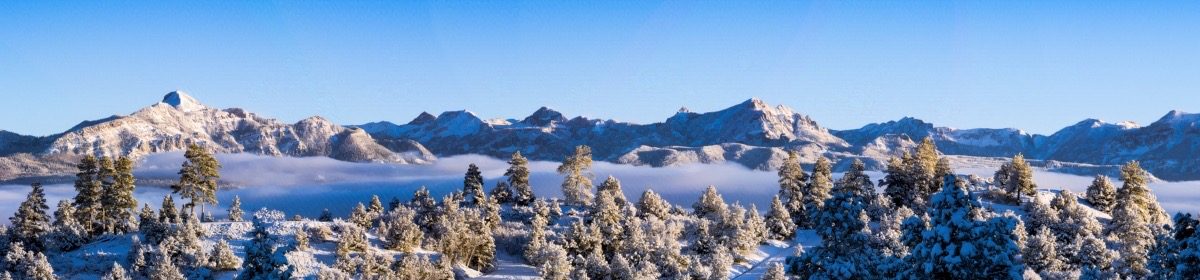
Courthouse Mountain and Cimarron Aspens
Courthouse Mountain Sunset, © Andy Butler

The Pagosa Springs Photography Club will meet on Wednesday, November 13, 6 pm, at the Community United Methodist Church at 434 Lewis Street. 

Our topic this month will be “Color in Landscape Photography”. We will watch and discuss a video Landscape Color Variation and Combinations by National Geographic photographer Michael Melford. Melford will present several concepts for ways in which color variations can be used in your photographic compositions. Those attending are asked to bring your ideas, and questions, on using color in your photographic compositions. 

Members may bring up to 10 digital images on a flash drive to share and discuss following the program.  Given our topic, perhaps think of “colorful” images. 

This will be our last monthly meeting of the year; the club will resume programs in January. Also, because of the Thanksgiving holiday, we will not have a Photo Talk and Coffee this month. However, we do plan to have one on Dec 5 at the usual place (Dorothy’s Cafe) and time (9 am). 

Winners of 2019 Digital Photography Contest Announced

The Pagosa Springs Photography Club held it’s 2nd annual Digital Photography Contest recently. Eighteen club members entered this year’s contest.  Images were entered in four categories: Landscape, Nature, Creative, and People. Winners were selected by two professional photographers, and the winning images were announced at an Awards Gala on October 9, held at the Elk Park Meadows Lodge. During the evening, members had a chance to view all the images entered in the contest. The top images in each category are shown below. Click on the thumbnails to see a larger version of each image.

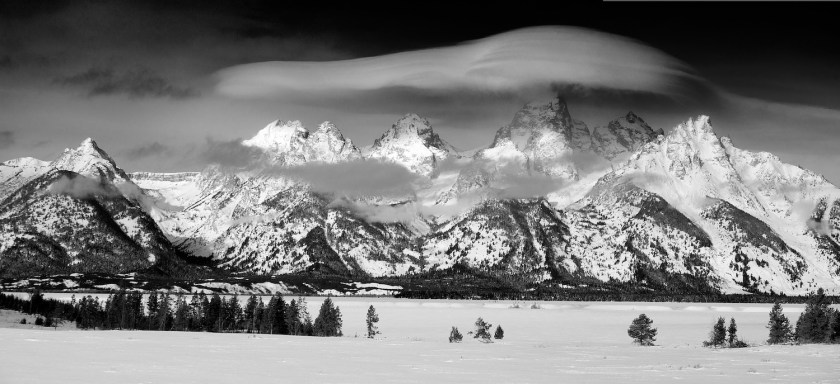
In the Landscape category, first place went to Chris Roebuck, for Climb Higher. Andy Butler received Second Place for Deadhorse Dawn, and Third Place was awarded to Bill Milner for Grand Canyon. Pagosa Fall, by Fred Guthrie, received Honorable Mention.

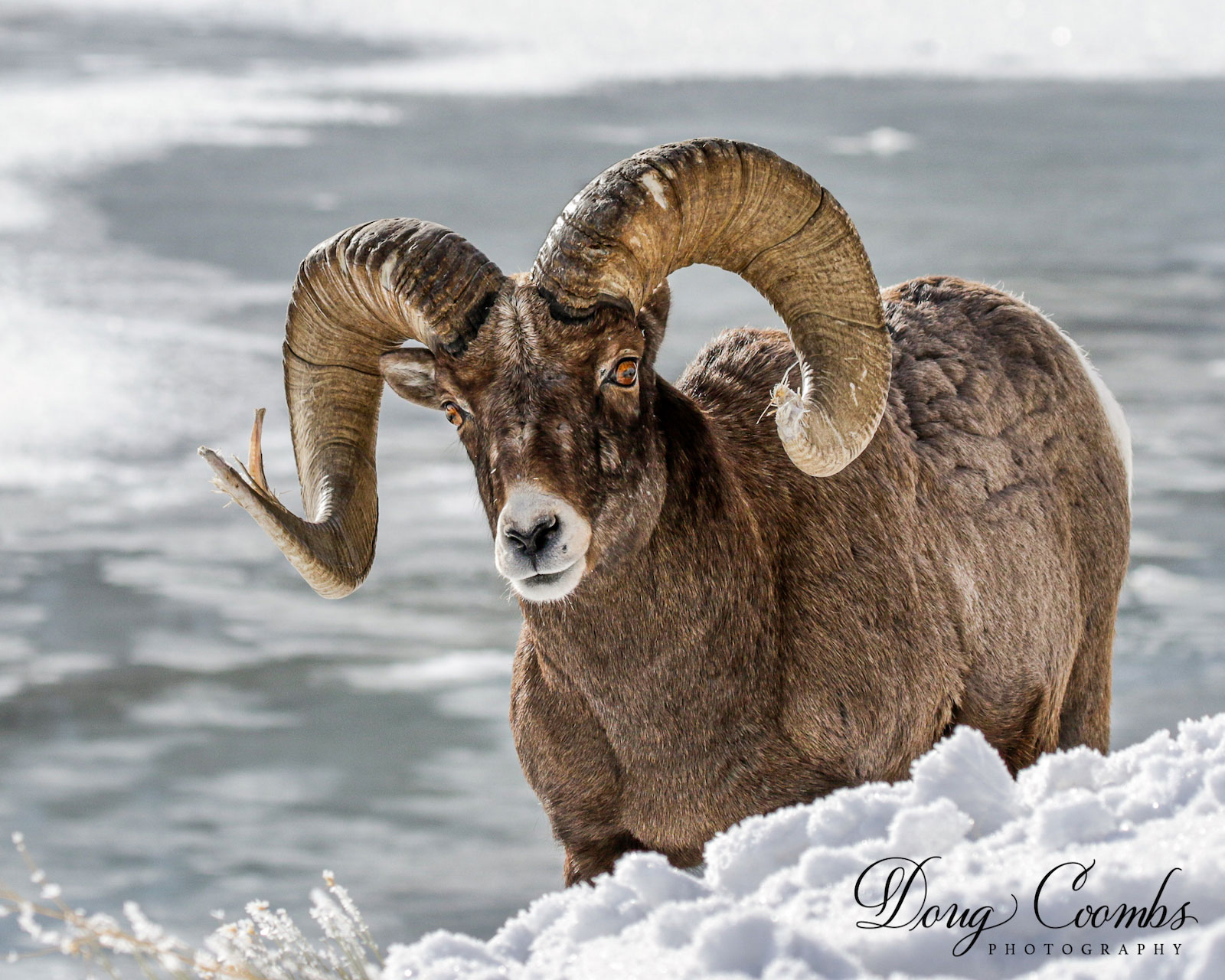
Winner in the Nature category was Dave Anderson, for Sunflower. Chris Roebuck received second for his image Bighorn, and Bill Milner was awarded Third for Rock Wall. Three images were awarded Honorable Mention: Lunch, by Dave Anderson, The Look, by Andy Butler and Pagosa Flower, by Fred Guthrie.

In the category for Creative images, Bill Milner received First Place for his image Rodeo Paint. The Second Place image was Aspen Haze, by Andy Butler and Third was awarded to Bill Milner for Thousand Island Paint. Three images tied for Honorable Mention: Pagosa Fly by Fred Guthrie, Turquoise Crack, by Liz Mockbee and Twilight Ice, by Dave Anderson.

Bill Milner’s image Funny Mbazi was winner in the People class. Second prize was awarded to Liz Mockbee for Slot Canyon Explorer, and Third went to Chris Roebuck for Magic of Fire-Controlled Burn. Bill Milner also received Honorable Mention for his portrait Lachu Maya Rai.

Congratulations to the all the winners! Thanks to everyone who entered the contest, the contest committee, judges and everyone who helped make our 2019 Digital Photo Contest a success!

Digital Photo Contest Awards Party

Photography Club Members: Please join us for the 

DIGITAL PHOTO CONTEST AWARDS PARTY

Of the 

Pagosa Springs Photography Club

Wednesday, October 9, at 6 PM

At the  Elk Park Lodge 

All Club members and spouses are invited, whether you entered the contest or not.

The Club will provide chicken as a main course,  beverages (non-alcoholic), plates & utensils.

Attending members are asked to bring a pot luck dish to share, as follows: 

Last names beginning with:

A-H – Salad

I-P – Appetizer or vegetable

Q-Z – Dessert

If you would like to drink alcohol with your dinner, please BYOB

All images entered in the contest will be displayed and winners will be announced.

Please RSVP no later than 6 PM October 6 so we can bring enough food for all. We will also send the gate code needed to access the venue to those who RSVP. Let us know if you are coming, and if you are bringing a guest. RSVP to  photoclub@digerati-frontiers.com

Directions to Elk Park Lodge: Going west from Pagosa Springs, turn right on Ironwood Dr. This is just across the highway from the large “Happy Camper”  RV Park sign, about 6 miles from the City Market area, and just before you reach Aspen Springs. Enter Elk Park through the gated entrance. Code for the gate will be sent to those who RSVP. Drive up a slight hill; the Lodge is the 2nd left driveway.

Tips for Naming Fine Art Photos

by Joseph T Sinclair

by Joseph T. Sinclair

Vrille Naturel
Vrille Naturel ©Joseph T. Sinclair

Names Matter

In the best of all possible worlds, a fine art photo shouldn’t have a name. The art should speak for itself. When you add a name, however, the words become part of the work of art, like it or not. And words are powerful. Unfortunately, in Western civilization there is unwritten pressure to name works of art. Rembrandt Kunstwerk 112 is not very satisfying. Consequently, you do need to create a name and understand that the name itself becomes part of your photographic art.

Yet most career photographers need to sell their fine art. And marketing is a different matter than art. Most photographers need a marketing element in the names for their photos. Thus, a thoughtful combination of poetry and ad copy is a good way to think of naming photos. If you’re serious about your art and about selling it, naming it is not a trivial task.

Don’t Fall in Love with It

Don’t fall in love with a name. Pick a name that fits the theme of the show you want to enter. As a consequence, a photo may end up with more than one name (i.e., entered in more than one show). This is extra work, but it’s more work to find a good photo that matches a show theme.

Translate It

If you can’t think of a good name, pick a pedestrian name. Then translate it into French on Google. No one will understand it, yet it will add a touch of elegance to your photo. Or use Spanish, Italian, Romanian, or Portuguese. But no other languages, please. I named one of my photos Vrille Naturel (French) and was happy to do so. Sounds kind of cool, but I can’t remember what it means. It would be přírodní kontury in Czech, not quite so engaging.

Make It Long

Make it a long name. If properly imagined, it can add a lot to your photo. But capitalize the first letter of each word. Otherwise it might be read as a caption, not as a name. Example: Candle-Lit Impressionist Color Portraiture Study of a Mother on a Theme by Sandro Botticelli. Otherwise you might have to name it Madonna confusing it with the Rabelaisian pop star.

Steal It

If you run across good names in photo shows or in publications, write them down for future use. No one can copyright art titles. But don’t steal from photographers in your own geographic area or in your own photo organizations. Bad manners. And don’t steal famous names (e.g., Moonrise, Hernandez, New Mexico). Fatuous. You can steal book titles and song titles too (neither are copyrightable).

Photographers steal images; how many times is the image of the sun’s rays streaming down through the haze into Antelope Canyon taken each day by different professional photographers? Answer: about eight dozen. That’s about 35,000 professional photographers a year who shoot in Antelope Canyon.  So, why not steal names too?

BTW, if you’re looking for a name for your Antelope Canyon photo, try this one: About Noonish in Mr. Slot Canyon. That’s a good one, and you can steal it from me.

A Gift from the Literary World

Advertisers use sex to sell. Why not photographers? Check out Writers in the Storm, a blog for novelists. It provides a huge list of common words in its Sensual Word Menu that may suggest sex:

https://writersinthestorm.wordpress.com/2011/06/10/sensual-word-menu-2/

You can use most of them in your photo names with complete innocence and without seeming indecent. Example: Sultry Sunset Afterglow on the Bosom of the  Mountain. Buyers will line up at the door.

Less Can Be More

There is one naming strategy for fine art portraits. Use only a first name such as Isabelle or Jacob. Such names convey an ambiance of mystery. Who the hell is Isabelle? Who the hell is Jacob? It’s not quite the same ambiance for Isabelle Smith or Jacob Jones. Let the viewer’s imagination run loose. Let the image itself do the speaking. Use only a first name alone. Keep in mind also that for fine art, the name of the portrait doesn’t have to be same as the name of the subject (model). In other words, use an evocative first name that fits the portrait.

Number It

This highly advanced promotional technique is appropriate only for the most aggressive photo marketers. A photo named Study of the Desert Sublime Number 17, if a compelling image, will leave the viewers thirsty for photos 1-16 (or more). It’s irrelevant whether numbers 1-16 exist or not. If such photos exist, they will have the attention of your viewers and may lead to interest in your other photos too. If photos 1-16 don’t exist, you simply represent 1-16 as being unpublished, and refer viewers to your other photos.

Streets

Developers and municipalities name streets after states (Idaho Avenue), places (Park Place), English counties (Devonshire Drive), famous people (Ted Kaczynski Boulevard), and animals (Raccoon Court). This is not a good precedent for naming photos. Leave it alone.