Club News

March Club Meeting: Black and White

Teton Cloudcap
Teton Cloudcap, Grand Teton National Park, Wyoming, © Dave Anderson

The March 11, 2020 meeting of the Pagosa Springs Photography Club will be held at 6 p.m., at The Community United Methodist Church, 434 Lewis Street. Our speaker this month will be Club member Dave Anderson, who will give a presentation on  Black and White Photography in the Digital Age.  

Black & white photography can be useful for emphasizing textures, shapes and contrasts in images, for creating more abstract views of a scene, creating dramatic sky or sky-sun combinations in images, and for architectural and fine art photography. The presentation will discuss different methods of creating black and white photographs, and the use of digital filters and presets to produce black & white images in Photoshop and Lightroom post-processing software, with examples comparing color and black & white versions of the same image.

Dave Anderson has a Ph.D. in Chemistry and worked before retirement as a research scientist on malaria, multi-drug resistant bacteria, disease biomarker discovery, drug target identification and other areas. His photographic interests include landscape and nature photography and occasionally urban and abstract photography.

Club members are encouraged to bring up to five photos on a thumb drive to share with the group after the presentation, if time permits. If you have some black & white images of your own, this would be a great month to bring them! (Please note the new limit of five photos, designed to allow more time to appreciate and discuss the images.)

The Pagosa Springs Photography Club promotes educational, social and fun interactions between all who enjoy making and viewing great photography.  The club sponsors educational programs and outings to help photographers hone their skills. Membership is just $25/calendar year for individuals and $35 for families. Non-members are invited to attend a meeting to learn more about the club. For membership information visit our website at https://pagosaspringsphotoclub.org/about/ .

Inspire Yourself

by Joseph T Sinclair

It seems to me that modern art museums are more historical collections than aesthetic collections. If so, where do you go today to see really good art (including good photographs)? Galleries whether online or offline are uneven quality. Some good artists but mostly average artists.

Back in the good old days when I was a writer attending digital industry trade shows on a press pass, I was always thrilled to see the annual Adobe collection. Adobe featured about 50 works of digital art (including photographs) at its trade shows, albeit in physical form. The art was stunning. Much more great art in one place than anywhere else I’ve ever seen.

20180911_164237-c
My attempt at art, not from Adobe

Alas, today Adobe charges over $1,000 for entry to its trade shows, and I don’t have a press pass. I don’t know whether they still feature their annual art collection. If they do, it’s almost worth $1,000 to see it.

Fortunately, Adobe recently started Create, an online magazine. It’s wonderful. It’s free. And it’s an inspiration. I’m amazed at the high quality of the art. It’s one of those publications you don’t want to miss viewing.

https://create.adobe.com/

Think about it. Today the US population is triple what it was 100 years ago. Back then you could know most of the leading artists if you were an art aficionado. Today people have more leisure time. And artists find it easier to stay alive on a small income (although not to live a middle-class life) than ever before.

Today there are simply too many great artists. Even if you’re an aesthete, you just don’t know or have never heard of most of the great artists among us. Our descendants will still be discovering them many decades from now. But what’s a good way to gain some access to some of our great photographers today? I believe Create is one way. Not all the featured artists are great. But enough are in order for the magazine to stretch your imagination.

Print Sharpness

It’s difficult to discuss sharpness without making some assumptions. The photograph itself has to be sharp. That means a good camera and lens, correct focus, steady platform, etc. This discussion assumes that you start with a sharp photograph. And then you print.

As an example, let’s use the Sony A7 II, a 24MP (megapixel) camera, which has a frame of 6000 x 4000 pixels.

Commercial printing (e.g. magazines) is done at 240 dpi. Fine art printing is done at 300 dpi. (Most people can’t see much more than 300 dpi.) At 240 dpi the Sony 24MP camera generates a physical print 25 x 16.7 inches. At 300 dpi the print is 20 x 13.3 inches. (length in pixels ÷ dpi). When you consider viewing distance, however, the further you get away from a photograph, the less dpi you need to create the same illusion of sharpness.

The distance/sharpness is difficult to calculate due to so many variables. But the chart at this website gives you something to go by:

http://resources.printhandbook.com/pages/viewing-distance-dpi.php.

It indicates that at a 24-inch viewing distance, you need 300 dpi to get the maximum sharpness. Yet at a 40-inch distance, you need only 180 dpi to get the maximum sharpness. Think of 24 inches as being about the distance you view a photography book or look at a computer monitor. Think of 40 inches as being about the typical distance you look at a photograph hanging on the wall in a museum, gallery, office, or home.

Using the 40-inch viewing distance, you can generate a 33.3 x 22.2 inch print of a 6000 x 4000 pixel photograph at 180 dpi, and it will look as sharp as can be. But if someone sticks their nose into it (gets closer than 40 inches), it will not look its maximum sharpness.

Another means of determining distance/sharpness is to calculate the maximum viewing distance according to the diagonal measurement of the printed photograph. Some experts say the viewing distance should be 2x, some 1.5x, and some 1x (of the diagonal).

Calculate the diagonal with the formula: c = √(a2 + b2) where a and b are the frame dimensions and c is the frame diagonal. Thus, for a 20 x 13.3 inch print, the diagonal is 24 inches. At the conservative 1x, the viewing distance is 24 inches for maximum sharpness (300 dpi). At 1.5x, the viewing distance is 36 inches. And at 2x the viewing distance is 48 inches. Thus, for these last two distances, you would need only a dpi well under 300 to provide maximum sharpness for viewers.

It’s all very subjective. But one thing is certain. The first consideration of sharpness is how the viewer will see the print. And distance matters.

The next consideration is whether you can improve the sharping because it’s a digital photograph and not a film photograph? For many digital photographs the answer is a modest yes. For some photographs the answer is an absolute yes. Sharping digital photographs is beyond the scope of this article and is also subjective. But you may be able to enlarge a photograph 10%, 20%, or 30% and still retain its inherent sharpness by applying sharping in postprocessing. (However, you can’t take an unsharp photograph and make it sharp with postprocessing.) In other words, just by sharping in postprocessing, you may be able to enlarge a photograph a little without the loss of sharpness.

Another consideration is general enlarging. How much can you enlarge a photograph without noticeably losing sharpness? One of the original guidelines was that you could enlarge about 30% by doing 10% at a time, without noticeably losing sharpness. Today the algorithms are better, but the experts’ opinions are subjective. Some say 50% enlargement. Some as high as 400%. But this is something that depends on the characteristics of the photograph, your enlarging experimentation, and the software you use. You might want to do your experimenting with a small portion of your photograph first before committing to printing the whole enlargement.

You will want to remember that enlarging 2x does not double the frame dimensions. It doubles the area of the photograph. If you double the frame dimensions, you enlarge the area 4x.

Finally, consider the medium. Metal prints can be printed at 300 dpi, although 240 dpi is a typical default for metal printing services. The dpi of inkjet printers is virtually impossible to calculate without a lot of specifications you probably can’t easily get. The dpi for inkjet and laser printers is based on advertising, not on the traditional printing dpi. In other words, a 1200-dpi inkjet printer may print only at 280 dpi according to traditional printing specifications. If you buy a printer, you may want to ascertain the actual traditional print specification first, if available. Likewise, if a photographic service provider uses an ink et printer, you will want to likewise ascertain the actual traditional print specifications.

A word of warning. You can order a 12000 x 8000 print of your 6000 x 4000 pixel photograph, and no one at a photographic service will give it a second thought. They will simply automatically enlarge it 4x as part of their processing. Although they usually have good enlarging software, it raises the question of whether you would rather enlarge it yourself knowing that your photograph will otherwise be automatically enlarged. In other words, just because you can order something, doesn’t mean that it will retain its sharpness to the degree you require for your viewers. You may want to have more control.

What’s my practice? I don’t enlarge anything and don’t worry about sharpness. With my 25 MP camera, this is a practical point of view. Nonetheless, there are always those situations where I need a large print, and enlargement is required. In such cases (rare for me because I print few photographs), I decide how to enlarge based on the factors outlined in this article; that is, I handle each photograph on a custom basis. But if you find yourself enlarging your photographs all the time, you may want to get a camera with more MPs thus enabling you to forgo enlarging so much of the time. The new Sony A7R IV has 61 MPs (35mm type camera) with a 9504 x 6336 pixel frame, and its brand competitors are comparable.

Finally, if you typically crop much of a digital photograph away, you may have a need to enlarge what you have left. In that case, a camera with plenty of MPs is doubly useful to your photography efforts.

Creating a Digital Signature

_N5A0557Bsm
Big Horn Ram in Yellowstone National Park, © Doug Coombs

The February 12 meeting of the Pagosa Springs Photography Club will be held at 6 p.m., at The Community United Methodist Church, 434 Lewis Street. Our speaker will be Doug Coombs, on Creating a signature for digital artwork.  

Join us for socializing at 6 p.m., followed by a brief business meeting and presentation at 6:30 p.m. Club members are encouraged to bring up to five photos on a thumb drive to share with the group after the presentation, if time permits.

Doug will show how to create a signature for your digitally produced photographs and artwork using Photoshop. Such a signature can be stored as a .png image to be used from any post processing tool including Lightroom and Photoshop. He will discuss downloading and adding additional fonts to Photoshop, concepts related to font customization, and will demonstrate in real-time creation of a signature and how to use it in Lightroom and Photoshop.

Doug is the chair and co-founder of the Los Alamos Adobe Users Group in New Mexico and a former chair of the Los Alamos Photography Club. He has been doing photography since high school, worked as a photographer and dark room tech in college, and fell in love with digital photography in 2003. Doug is primarily a landscape and nature photographer, with an affinity for birds and wildlife. He splits his time between Los Alamos, Pagosa Springs, and a generous amount of travel to various photogenic destinations.

The Pagosa Springs Photography Club promotes educational, social and fun interactions between all who enjoy making and viewing great photography.  The club sponsors educational programs and outings to help photographers hone their skills. Membership is just $25/calendar year for individuals and $35 for families. Non-members are invited to attend a meeting to learn more about the club. For membership information visit our website at https://pagosaspringsphotoclub.org/about/ .

January topic: Ten Images

Pagosa Peak, from Ice Cave Ridge
A winter view from Ice Cave Ridge

The first meeting of the Pagosa Springs Photography Club for 2020 will be held on Wednesday, January 8, 6 pm, at the Community United Methodist Church at 434 Lewis Street. 

A major emphasis of the Club is to improve our photographic skills through learning from one another. In that vein, our January program will be Ten Images: Show and Tell. Members are requested to bring ten of your photographs from 2019 for discussion. These might be what you consider your best, your most interesting, or your most challenging photos of the year. Tell the group about each image, the situation when you took the photograph and what you like or might improve. The goal is to inspire Club members through a discussion of what makes good images, including aspects such as composition, impact, and technical quality.  This will be a more extensive discussion than what we typically have during our image share sessions (which we won’t do this month). 

As an introduction to the discussion, we will re-visit a 10 minute video presentation on the “f-5.3” method of critiquing images (Gregg Heid presented this method to the Club a couple of years ago). The video will give us a good starting point for thinking about what makes great images.

Club members area also invited to our first Photo Talk and Coffee breakfast of the New Year, at Dorothy’s Cafe, on January 23 at 9 AM. These breakfasts are a great way to have an informal chat with other club members about photographic topics (or other topics of interest). 

The Photography Club’s membership year begins in January. For those of you have not yet paid your dues for 2020, you may do so at Club meetings. Dues will remain at $25 this year ($35 family). The membership form may be downloaded and mailed in with your payment (instructions on the form) if that is more convenient.

Cropping

by Joseph T Sinclair

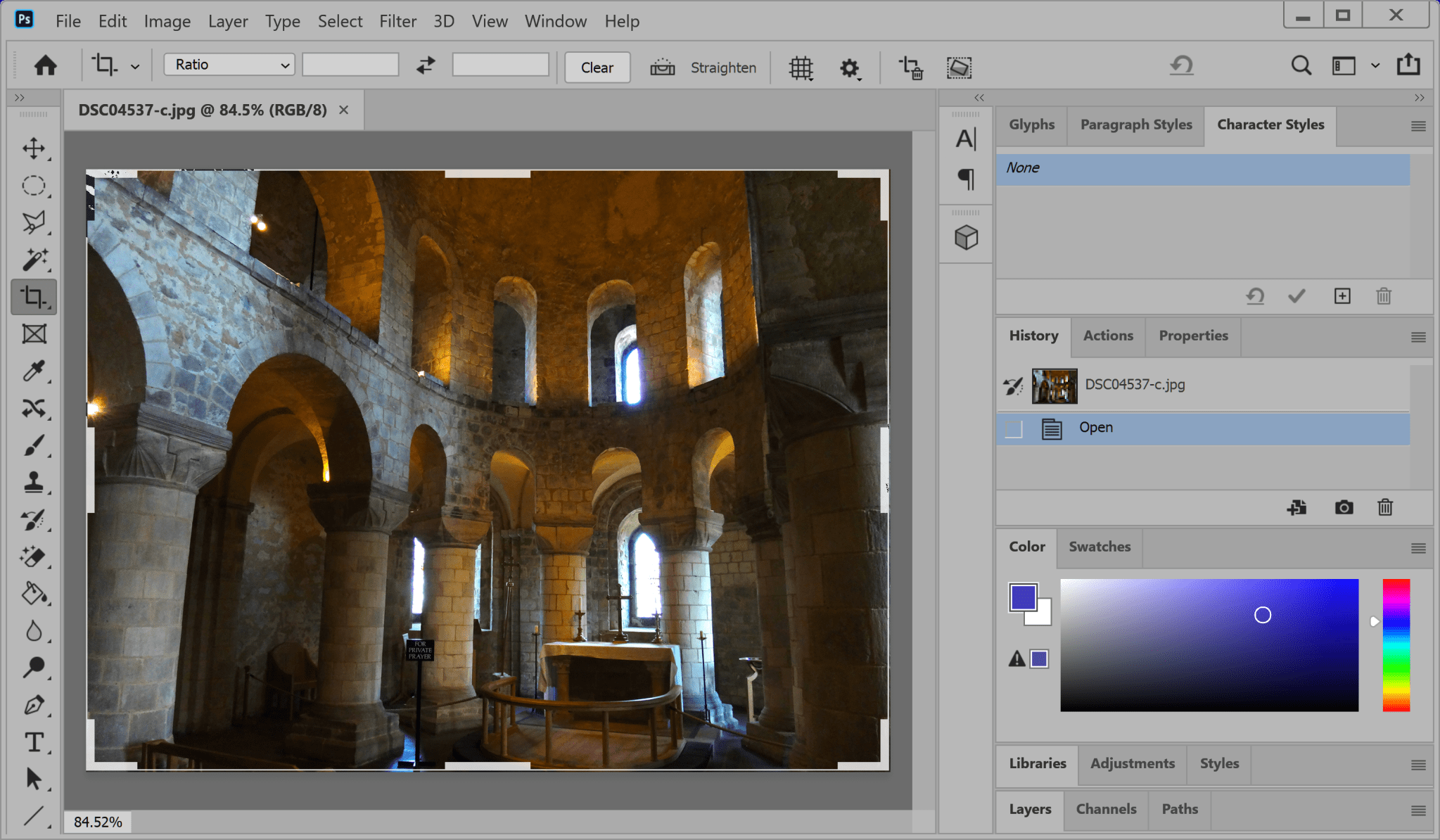
This is a simple postprocessing technique but requires an in-depth look as to how it can fit into your photography. I will use Sony cameras as examples, but of course other camera systems are similar. And the focus of this discussion will be on resolution (inherent in 35mm film), which is one of the most important characteristics of good photography except in cases when you forego the sharpness of high resolution for other photographic effects.

Most experts tell us that a 10-12 MP (megapixel) camera is the equivalent for resolution of a 35mm film camera. Indeed, Sony’s original top-of-the-line fast-action camera (A7S – made to maximize multiple frame shooting rather than large frame size) had only 12 MP and cost 20% more than Sony’s then current top-of-the-line general purpose camera (A7R) with 36 MP. With a 36MP camera you can get about three times the area of a film-equivalent photograph and still have the resolution of 35mm film for each third. That means you can crop 67% away and still have a full size 35mm-film equivalent photograph (and 35mm-film sharpness). In other words, the more MPs the merrier. MPs matter for cropping.

For starters, let’s dispose of the Haiku philosophy of photographic art. It goes something like this. Photographs must be traditional rectangles (with unequal adjacent sides and a limited selection of aspect ratios) so as to impose the proper aesthetic discipline for creating fine art. That’s like saying a poem must be a Haiku poem in order to be considered fine art. A Haiku poem has three sentences with 5 syllables, 7 syllables, and 5 syllables respectively. And it’s a traditional form. But I don’t think Haiku defines poetry. And likewise, traditional rectangles (frames) don’t define fine art photography.

Indeed, cropping is the new aesthetic freedom. Cropping used to be done in the darkroom, which made it somewhat limited and generally unavailable to most photographers. Now it’s done in digital postprocessing and is quite easy for anyone to do. Even fun. Beyond just cropping and adjusting the sides of a rectangle, one can even create a photograph of any shape in postprocessing using various software techniques.

What are the considerations for cropping?

  • You don’t have to be so careful framing your photos. In fact, if you overshoot a photograph (take a photograph larger than the frame you seek), you can easily crop it to your specifications more precisely in postprocessing.
  • If hurried, you can simply point and shoot; and crop later.
  • If something is in the photo you don’t want, you may be able to crop it out.
  • Upon review, you may find a photograph within the photograph that you find more aesthetically appealing than the overall. You can crop it out.

DSC09458-c-full

DSC09458-c

  • You can create various shapes of photographs in postprocessing, such as circles, ovals, triangles, and custom forms.
  • If you crop to an odd shape, you can have a metal print service provider cut the print into the shape (e.g., MagnaChrome, Concord, California has a computer-guided metal cutter that can do so).
  • With enough MPs, you can crop away a substantial portion of a photograph and still have enough left for a resulting sharp film-equivalent photograph.
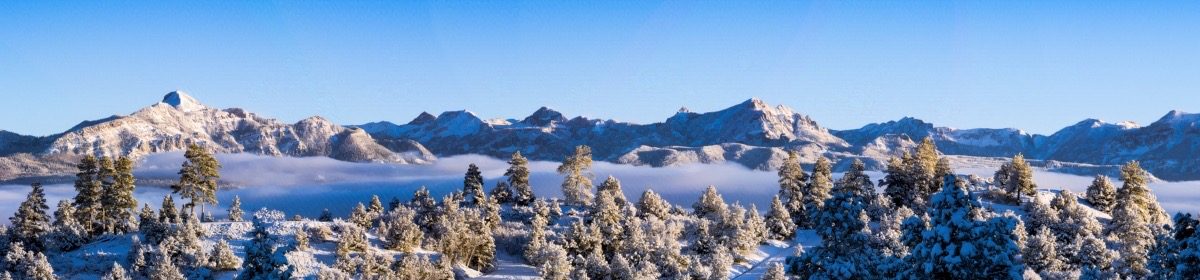
  • You can crop away the upper third and the lower third of a one wide-angle landscape photograph to make a panorama.

DSC00689-c

DSC00689-c-crop2

  • You can make different versions of the same photograph (different crops).
  • You can set a crop to a certain preset aspect ratio and print a photo that will fit into a certain size off-the-shelf (prebuilt) frame.
  • You can set a crop to a certain preset aspect ratio and create a photo that will fit snuggly into a photo collage.
  • You can use any lens as a non-optical telephoto lens by cropping away all but the small portion of a photo.
  • You can often crop to correct mistakes that you make. There are so many ways to make mistakes, even for the best photographers, that cropping capability becomes quite valuable.

How about a practical example. Sony now has a 61 MP 35mm-type camera (A7R IV). Is that too many MPs for ordinary use? No. How about using this Sony camera with a super sharp 50mm lens (e.g., Sony-Zeiss 55mm f1.8). Do you also need a telephoto lens? Or can you crop out a one-sixth portion of a 50mm-lens digital photograph and use it as a film-equivalent photograph? Something to think about.

Digital cropping brings a bonanza of new techniques to use to create all sorts of appealing photographs and to help define new opportunities in photography. That’s why MPs are important. The more MPs your camera sensor has, the more flexibility you have for cropping.

irr-crop-2-c