The Pagosa Springs Photography Club will meet on Wednesday, November 13, 6 pm, at the Community United Methodist Church at 434 Lewis Street.
Our topic this month will be “Color in Landscape Photography”. We will watch and discuss a video Landscape Color Variation and Combinations by National Geographic photographer Michael Melford. Melford will present several concepts for ways in which color variations can be used in your photographic compositions. Those attending are asked to bring your ideas, and questions, on using color in your photographic compositions.
Members may bring up to 10 digital images on a flash drive to share and discuss following the program.Given our topic, perhaps think of “colorful” images.
This will be our last monthly meeting of the year; the club will resume programs in January. Also, because of the Thanksgiving holiday, we will not have a Photo Talk and Coffee this month. However, we do plan to have one on Dec 5 at the usual place (Dorothy’s Cafe) and time (9 am).
The Pagosa Springs Photography Club held it’s 2nd annual Digital Photography Contest recently. Eighteen club members entered this year’s contest. Images were entered in four categories: Landscape, Nature, Creative, and People. Winners were selected by two professional photographers, and the winning images were announced at an Awards Gala on October 9, held at the Elk Park Meadows Lodge. During the evening, members had a chance to view all the images entered in the contest. The top images in each category are shown below. Click on the thumbnails to see a larger version of each image.
In the Landscape category, first place went to Chris Roebuck, for Climb Higher. Andy Butler received Second Place for Deadhorse Dawn, and Third Place was awarded to Bill Milner for Grand Canyon. Pagosa Fall, by Fred Guthrie, received Honorable Mention.
Winner in the Nature category was Dave Anderson, for Sunflower. Chris Roebuck received second for his image Bighorn, and Bill Milner was awarded Third for Rock Wall. Three images were awarded Honorable Mention: Lunch, by Dave Anderson, The Look, by Andy Butler and Pagosa Flower, by Fred Guthrie.
In the category for Creative images, Bill Milner received First Place for his image Rodeo Paint. The Second Place image was Aspen Haze, by Andy Butler and Third was awarded to Bill Milner for Thousand Island Paint. Three images tied for Honorable Mention: Pagosa Fly by Fred Guthrie, Turquoise Crack, by Liz Mockbee and Twilight Ice, by Dave Anderson.
Bill Milner’s image Funny Mbazi was winner in the People class. Second prize was awarded to Liz Mockbee for Slot Canyon Explorer, and Third went to Chris Roebuck for Magic of Fire-Controlled Burn. Bill Milner also received Honorable Mention for his portrait Lachu Maya Rai.
Congratulations to the all the winners! Thanks to everyone who entered the contest, the contest committee, judges and everyone who helped make our 2019 Digital Photo Contest a success!
In the best of all possible worlds, a fine art photo shouldn’t have a name. The art should speak for itself. When you add a name, however, the words become part of the work of art, like it or not. And words are powerful. Unfortunately, in Western civilization there is unwritten pressure to name works of art. Rembrandt Kunstwerk 112 is not very satisfying. Consequently, you do need to create a name and understand that the name itself becomes part of your photographic art.
Yet most career photographers need to sell their fine art. And marketing is a different matter than art. Most photographers need a marketing element in the names for their photos. Thus, a thoughtful combination of poetry and ad copy is a good way to think of naming photos. If you’re serious about your art and about selling it, naming it is not a trivial task.
Don’t Fall in Love with It
Don’t fall in love with a name. Pick a name that fits the theme of the show you want to enter. As a consequence, a photo may end up with more than one name (i.e., entered in more than one show). This is extra work, but it’s more work to find a good photo that matches a show theme.
Translate It
If you can’t think of a good name, pick a pedestrian name. Then translate it into French on Google. No one will understand it, yet it will add a touch of elegance to your photo. Or use Spanish, Italian, Romanian, or Portuguese. But no other languages, please. I named one of my photos Vrille Naturel (French) and was happy to do so. Sounds kind of cool, but I can’t remember what it means. It would be přírodní kontury in Czech, not quite so engaging.
Make It Long
Make it a long name. If properly imagined, it can add a lot to your photo. But capitalize the first letter of each word. Otherwise it might be read as a caption, not as a name. Example: Candle-Lit Impressionist Color Portraiture Study of a Mother on a Theme by Sandro Botticelli. Otherwise you might have to name it Madonna confusing it with the Rabelaisian pop star.
Steal It
If you run across good names in photo shows or in publications, write them down for future use. No one can copyright art titles. But don’t steal from photographers in your own geographic area or in your own photo organizations. Bad manners. And don’t steal famous names (e.g., Moonrise, Hernandez, New Mexico). Fatuous. You can steal book titles and song titles too (neither are copyrightable).
Photographers steal images; how many times is the image of the sun’s rays streaming down through the haze into Antelope Canyon taken each day by different professional photographers? Answer: about eight dozen. That’s about 35,000 professional photographers a year who shoot in Antelope Canyon. So, why not steal names too?
BTW, if you’re looking for a name for your Antelope Canyon photo, try this one: About Noonish in Mr. Slot Canyon. That’s a good one, and you can steal it from me.
A Gift from the Literary World
Advertisers use sex to sell. Why not photographers? Check out Writers in the Storm, a blog for novelists. It provides a huge list of common words in its Sensual Word Menu that may suggest sex:
You can use most of them in your photo names with complete innocence and without seeming indecent. Example: Sultry Sunset Afterglow on the Bosom of the Mountain. Buyers will line up at the door.
Less Can Be More
There is one naming strategy for fine art portraits. Use only a first name such as Isabelle or Jacob. Such names convey an ambiance of mystery. Who the hell is Isabelle? Who the hell is Jacob? It’s not quite the same ambiance for Isabelle Smith or Jacob Jones. Let the viewer’s imagination run loose. Let the image itself do the speaking. Use only a first name alone. Keep in mind also that for fine art, the name of the portrait doesn’t have to be same as the name of the subject (model). In other words, use an evocative first name that fits the portrait.
Number It
This highly advanced promotional technique is appropriate only for the most aggressive photo marketers. A photo named Study of the Desert Sublime Number 17, if a compelling image, will leave the viewers thirsty for photos 1-16 (or more). It’s irrelevant whether numbers 1-16 exist or not. If such photos exist, they will have the attention of your viewers and may lead to interest in your other photos too. If photos 1-16 don’t exist, you simply represent 1-16 as being unpublished, and refer viewers to your other photos.
Streets
Developers and municipalities name streets after states (Idaho Avenue), places (Park Place), English counties (Devonshire Drive), famous people (Ted Kaczynski Boulevard), and animals (Raccoon Court). This is not a good precedent for naming photos. Leave it alone.
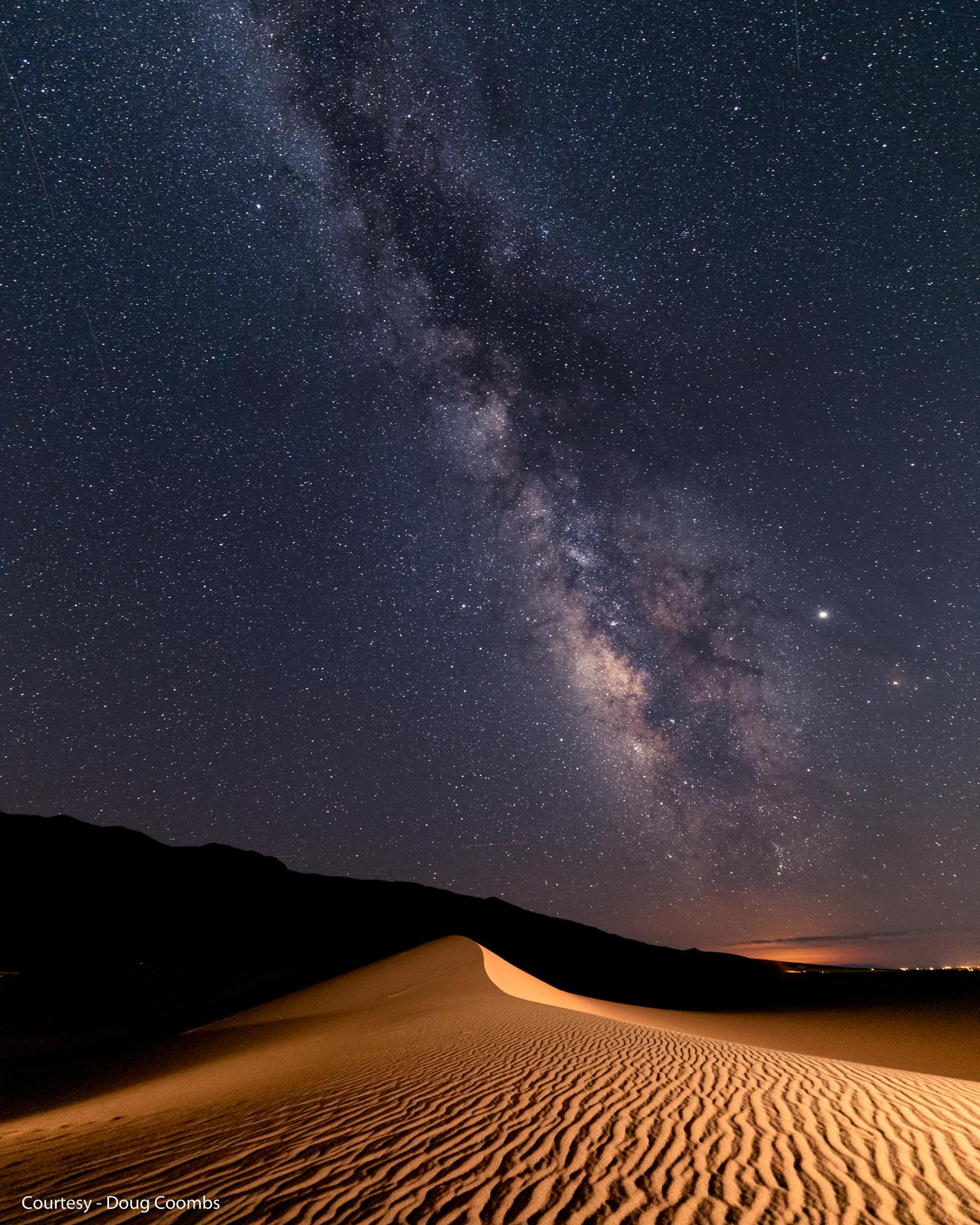
The September 11 Pagosa Springs Photography Club program, Milky Way Processing With Sequator, Photoshop and Lightroom, will be presented by Doug Coombs, at The Community United Methodist Church, 434 Lewis Street.
Join us for socializing at 6 PM, followed by a brief business meeting and presentation at 6:30 PM. Anyone interested in improving their photography is invited to attend, whether a novice or experienced photographer.Club members are encouraged to bring up to 10 photos on a thumb drive to share with the group after the presentation, if time permits.
Club members who are submitting photos for our 2019 Digital Photography Contest take note, the entry deadline is at our meeting on Sept 11. For details, see the post 2019 Digital Photo Contest.
Doug Coombs is a nature and landscape photographer who lives part time in Los Alamos, part time in Pagosa, and part time at numerous great photographic sites throughout the West. He is retired from his job as software engineer/developer at LANL. While not working, taking photos, or processing photos, Doug was President of the Los Alamos Photography Club for over 10 years and is currently president of the Los Alamos Adobe Users Group.
In order to reduce noise, Doug will show how to stack multiple exposures of a Milky Way photo using an open source tool for Windows called Sequator. In a previous presentation, he demonstrated this in Photoshop. After the stacked photo is created, he will demonstrate how he processes the photo in both Photoshop and Lightroom. In Photoshop he we be selecting the sky and the foreground separately to create adjustment layers. He will use RGB curves to change the sky to a blue tone.
The Pagosa Springs Photography Club promotes educational, social and fun interactions between all who enjoy making and viewing great photography.Membership is just $25/calendar year for individuals and $35 for families. To join or renew, fill in the member application form and mail it with a check for your dues to the address shown on the form, or bring it to one of our meetings.
The Pagosa Springs Photography Club (PSPC) is pleased to announce our 2019 Digital Photo Contest. The contest is open to all current members of the Club. New members may join at the time they enter the contest. Images may be submitted as digital files. There will be four categories: Landscape, People, Creative, and Nature. Two images may be submitted per category (up to six total), for a flat fee of $10. Winners will receive cash prizes of $20 for first, $15 for second and $10 for third place. Submissions are due by September 11, 2019 and will be judged by two independent professional photographers. Awards will be presented at the PSPC October meeting, which will be held on October 9, 6 PM. All entries will be displayed at the awards party.
Our goal with this contest is not only to recognize members for their talent, but also to encourage everyone to share their best work with the rest of the group. So pick your images and send them in!
The Pagosa Springs Photography Club will meet at 6 PM, August 14, at The Community United Methodist Church, 434 Lewis Street. Our speaker this month will be Andy Butler, with a presentation on Travel Photography: Iceland.
Join us for socializing at 6 PM, followed by a brief business meeting and presentation at 6:30 PM. Anyone interested in improving their photography is invited to attend, whether a novice or experienced photographer.Club members are encouraged to bring up to 10 photos on a thumb drive to share with the group after the presentation, if time permits.
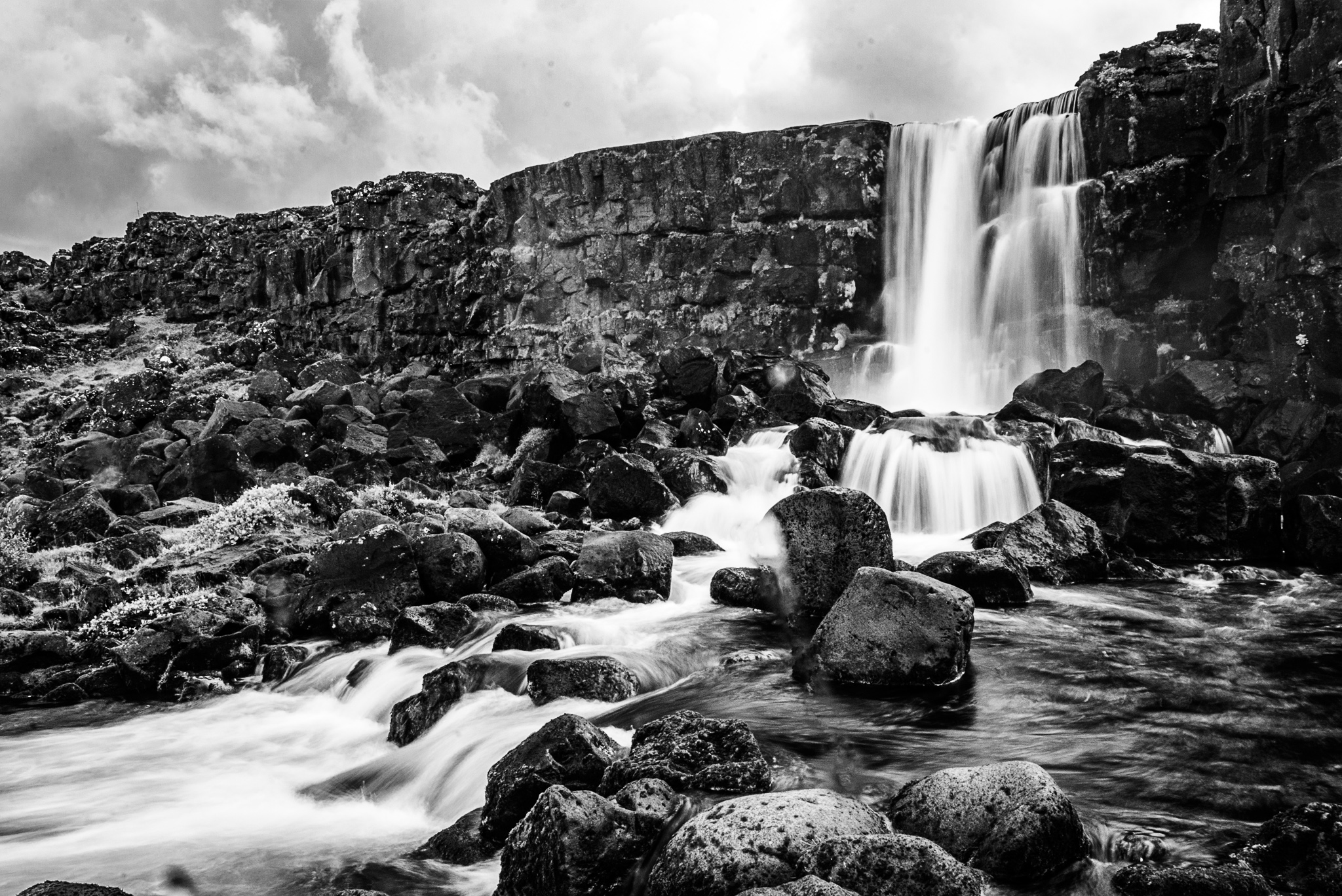
For the August presentation, Photography Club president Andy Butler will use images from a trip to Iceland to illustrate various aspects of travel photography. Topics will include planning, tips for creating more compelling travel photos, choosing your gear, and keeping your images safe while traveling. Andy’s major photographic interests include landscape, nature and travel photography.
The Pagosa Springs Photography Club promotes educational, social and fun interactions between all who enjoy making and viewing great photography.Membership is just $25/calendar year for individuals and $35 for families. To join or renew, fill in the member application form and mail it with a check for your dues to the address shown on the form, or bring it to one of our meetings.



 Pagosa Springs Photography Club