Geyser & Hot Spring Photography, May 8

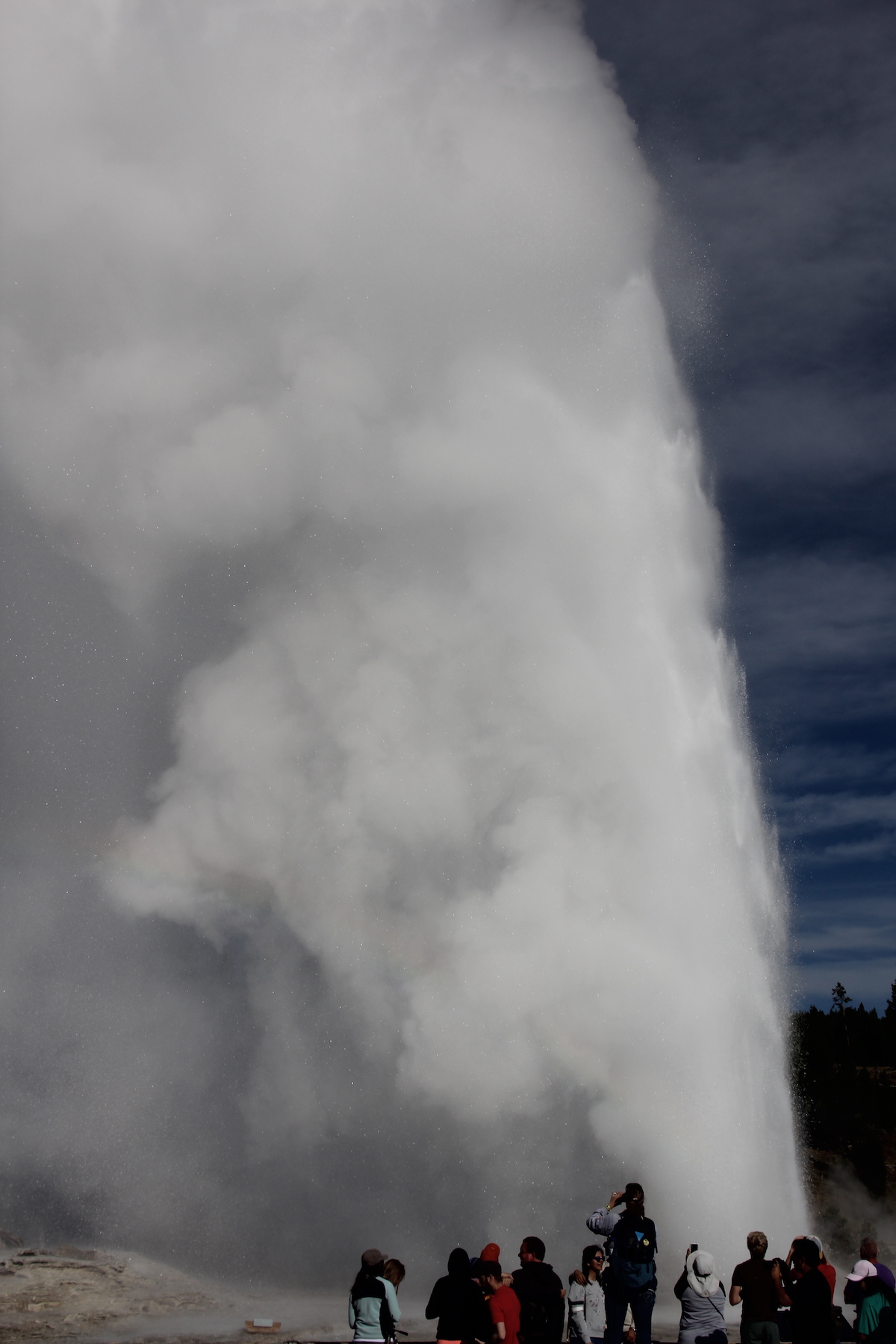
GiantGeyser-sm
Giant Geyser, Yellowstone NP, © Bill Johnson

The Pagosa Springs Photography Club will hold Its next meeting on Wednesday May 8, at The Community United Methodist Church, 434 Lewis Street.

Join us for socializing at 6 p.m., followed by a brief business meeting and our presentation at 6:30 p.m. The Photography Club welcomes all who have an interest in photography, whether beginner or expert. 

The presentation at the May Club meeting will be by Bill Johnson, on Geyser and Hot Spring Photography. Bill will cover various topics, emphasizing the geysers of Yellowstone and how best to go about photographing them, but extending to geyser fields world-wide.  

Bill Johnson is a retired nuclear scientist who lives part-time in Pagosa Springs and part-time in Los Alamos, New Mexico. He holds a Ph.D. in nuclear chemistry and spent most of his career at Los Alamos National Laboratory in arms control, nuclear nonproliferation, and counterterrorism.  His fundamental research interests were diverse and ranged from cosmic-ray physics to the geosciences to computer chess. Since his retirement, his volunteer activities include serving as “shopkeeper” for the Geyser Observation and Study Association (www.geyserstudy.org), an organization, “devoted to the collection and dissemination of information about geysers and other geothermal phenomena in Yellowstone National Park and elsewhere.”

Geyser photography at Yellowstone is a timely topic, not just because the national park is opening for the year, but also because several rarely seen but spectacular geysers are in an active state at this time. Steamboat Geyser, the world’s tallest, which after decades of near-dormancy, has been exceptionally active for the last year. Bill will be giving some tips on how best to position oneself for a chance to photograph Steamboat, other Yellowstone thermal features, and some of the world’s most famous geysers.

Club members may bring up to 10 photos on a thumb drive to share with the group after the presentation.

Using Selections, Layers, and Masks in Photoshop, Feb 13

The Pagosa Springs Photography Club will hold Its February meeting on Wednesday the 13th, at The Community United Methodist Church, 434 Lewis Street.

Join us for socializing at 6 p.m., followed by a brief business meeting at 6:30 p.m. Long time photographers and those just starting out are welcome.

The February Photography Club Meeting will feature Bill Milner. His presentation is entitled, Photoshop Selections, Layers and Layer Masks for Image Enhancements.

Bill is a former commercial photographer, and will give a presentation on using selections, layers and layer masks as techniques for enhancing digital image files. Bill operated a commercial photography studio in Salt Lake City, UT for 35 years doing product, architecture and industrial photography for advertising. An early adopter of digital imaging, he has years of experience using and teaching Photoshop. He and his wife Jacquie have owned a home in Pagosa for nearly 5 years and now spend about half their time here and and half in Salt Lake. They hope to make a permanent move here by the end of this year.

All members may bring up to 10 photos on a thumb drive to share with the group after the presentation. For February, members are encouraged to bring photos on the theme of Winter.

A reminder, it’s time to pay your Club dues for 2019. Dues are $25 for an individual, or $35 for a family. You may bring your dues to one of the Club meetings, or take to Susanne Russell at the Art & Framing Center of Pagosa Springs, 235 Country Center Drive, Suite E

November 14 Meeting, “Four Kinds of Light”

The November meeting of the Pagosa Springs Photography Club will be held on November 14, 6 PM, at the Community United Methodist Church fellowship hall. We will view and discuss a video lesson by National Geographic photographer Michael Melford, “Four Kinds of Light in Landscapes”. Melford will touch on a few concepts of composition in addition to discussing the effects of various kinds of light on landscape photos. What are your favorite types of light?

This will be our last regular meeting of the calendar year, so there will be some Club business to attend to as well.

Each member may bring up to 10 images on a flash drive to share. This month, consider bringing at least some photos that are “all about light”, in which the lighting (natural or artificial) is a major player in the image.

The gallery of photos from the Oct 1 Chama train chase has been updated with photos from more of the participants. So even if you already looked at it, check it out again. The gallery is on our Club web site: https://pagosaspringsphotoclub.org/2018/10/20/chama-train-chase/.

What’s Important in a Photograph, Oct. 10

Photograph © Gregg Heid

The Pagosa Springs Photography Club will hold its October meeting on Wednesday October 10, at The Community United Methodist Church, 434 Lewis Street.

Join us for socializing at 6 p.m., followed by a brief business meeting at 6:30 p.m. Experienced photographers and those just starting out are welcome.

The Photography Club normally meets the second Wednesday of each month at 6:00 p.m. in the fellowship room of the Methodist Church.

The October Photography Club Meeting will feature Gregg Heid. His presentation will be on “What’s important in a photograph”. He will discuss several qualities that help create photographs that grab your attention, including emotion, light, composition, and creativity. Heid is the current Vice President of the Photography Club and has been active in the club for several years.

Club members are invited to bring up to 10 photographs on a flash drive for sharing with the group. In recognition of the season, everyone is encourage to include at least some images on the theme of “haunted or hunted”. 

If you have questions or concerns, please contact us through our website pagosaspringsphotoclub.org.

Fall is Here!

Sneffles Range Dawn © Andy Butler, Nikon D7100, 85 mm, f/8, 1/125 sec

Happy Equinox day! Autumn is a favorite season for many photographers. Here in Southwest Colorado, the forests are alive with gold from Aspen, willows and cottonwoods. Although reds are not as common, look around and you’ll find many Autumn hues beyond gold. 

While it’s easy to find great color and take pleasing images, after awhile you’ll find many of your photos look good, but also look much the same as everyone else’s. So it’s worth spending some time thinking about ways to make your images both technically better, and also more creative. 

Here are eight tips for better Autumn shots, from Peter Baumgarten. I especially like his tip to not let the weather stop you!

https://www.creativeislandphoto.com/blog/8-tips-for-better-autumn-shots

Nasim Mansurov, at Photography Life, has several good Fall foliage tips. His article features several images from the Dallas Divide area, near Ridgway, where the photo above was taken. 

https://photographylife.com/fall-colors-photography-tips 

One of his suggestions is to use a polarizing filter. which can really help to reduce specular reflections from foliage, producing richer colors. Another is to do your research into good places (and times) for the best Autumn foliage photographs. Finally, and always important, Mansurov reminds us to always identify what, exactly, our subject is. 

Finally, Outdoor Photographer has ten great ideas for more creative fall color photography from Kurt Budliger, at https://www.outdoorphotographer.com/tips-techniques/nature-landscapes/techniques-for-fall-color/.  His tips include using backlight, long exposures, long lenses (to isolate color) and a variety of other techniques to give your images of fall color a more unique, creative look. Well worth a read. 

Personally, I’m going to spend part of the first day of fall photographing one of my favorite locations in the Pagosa Springs area, around Plumtaw Road, with other Photography Club members. I’m hoping for a few clouds to develop. Enjoy the fall color while it lasts! 

Tips for Photographing Star Trails

One of the topics I did not have time to discuss during last week’s presentation on photographing the Milky Way was making images of star trails. Ian Johnson has published some good tips and techniques for star trail photography over at Digital-Photography-School.com . It’s well worth a read if you are interested in this type of photography. Johnson discusses the basics of star trails, as well as composition, processing, light painting, and the effects of focal length and exposure times. It’s clear that this is an approach that is ripe for lots of experimentation and creativity.

I’ve learned one trick that works well for star trails if you don’t have an intervalometer, or like me, you are too lazy to use the one built into your camera. You do still need a cable release, though. Once you have your camera set up to capture the scene you want, set the camera’s shutter speed to the longest possible, without going into bulb mode. On my Nikon, this is 30 sec. Then, set the camera for high-speed continuous shooting. This is the mode that allows you to press the shutter button down and take photo after photo until you let up. Start the star trail sequence by locking the cable release to “on”. In this mode, the camera will take a 30 sec exposure, then another, and repeat until you unlock the cable release. The camera will fire away, shot after shot, until you stop it (or the battery dies). Using a wide angle lens, you probably want to let it go at least half an hour, and longer is often better. With a 50 mm or longer lens, a shorter time will give you good trails. Johnson walks you through the steps for combining the photos as layers, using the “lighten” blend mode in Adobe Photoshop. This will work in any software that uses layers and has the proper blend mode. I use a dedicated app called StarStax, which has several features such as gap filling (for the brief time between sequential images) and the ability to save out intermediate steps to create a time-lapse movie effect. StarStaX is free, but if you like it, the software’s author would appreciate some money for beer or coffee as a donation.

Another consideration is that you can control the apparent density of trails using the ISO setting on your camera. ISO 1000, for example, will give you many trails close together. ISO’s of 200 to 400 would give you fewer trails, mostly from the brighter stars. It’s another way to control the look of your image.

As with all nightscapes, knowing a little about the stars, planning for a foreground, and using some creativity will help you make great images.