December Dark Sky Events

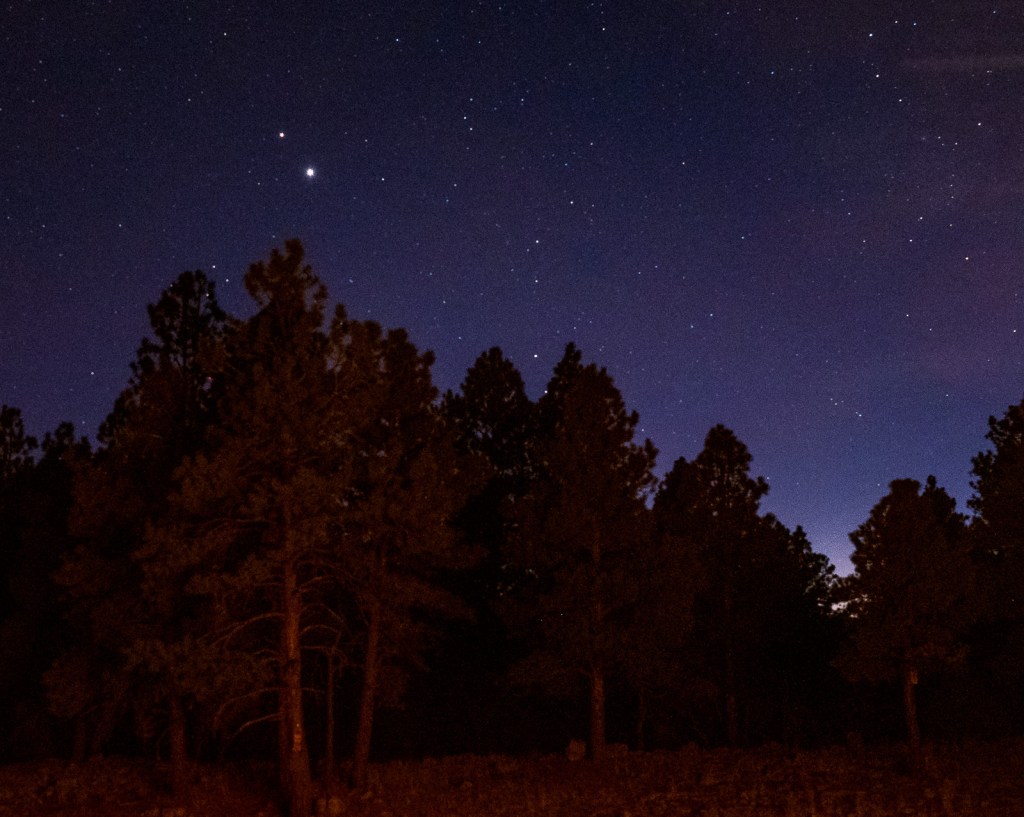
Saturn and Jupiter in the evening sky over Pagosa Springs, Dec 5, 2020 © Andy Butler

As we move towards the shortest day of the year, it’s a good time to think of night photography. There are a couple of significant events coming up that could be of interest to both photographers and stargazers. 

First, the Geminid meteor shower, one of the most reliable meteor showers of the year, will reach it’s peak on the night of Dec. 13-14. With the new moon on Dec 14, skies should be dark enough to see quite a few meteors. However, you should be able to see meteors any night beginning this weekend (Dec. 4).The Geminids appear to radiate from the constellation Gemini, which conveniently is above the horizon before midnight in December. The maximum activity should be after midnight in the early morning of December 14, with up to 75 meteors per hour visible. The Geminids are one of only a couple of major showers derived from an asteroid, 3200 Phaeton, rather than a comet. Look to the east for this shower. 

For best viewing of the Geminids or other meteor showers, find a relatively dark site. If you want to photograph a meteor shower, there are a few things to keep in mind. First, the number of meteors “visible” includes the entire sky, while even a very wide-angle lens is not likely to cover more than 1/3 of the night sky. So you are unlikely to capture more than one shooting star even in a minute-long exposure. Second, if you want to keep the stars as points of light, rather than streaks, you will need to limit your exposure time. A rule of thumb is to limit exposure times to 500 divided by your lens focal length (in full-frame equivalent). So, if you have a 16 mm lens (full frame) then 500/16 is roughly 30 seconds. If you think you will be making large prints from your photos, you should be more conservative, maybe using 20 seconds in this example. A good starting point is to set your aperture to f/2.8, shutter speed 30 seconds, and ISO 6400; basically the same as you would use for Milky Way photos. To increase your chances of getting one or more photos that contain a shooting star, set up your camera to automatically take these 30 second exposures for several hours during the night. To do this, either use your camera’s built in intervalometer, or an external cable release with intervalometer. If you have chosen an interesting foreground subject in the landscape (you should!), it would be good to either take a longer exposure of it, or to take a separate photo of the landscape using light-painting or low level lighting. Back home, check all the photos to find the ones with meteors streaking through the sky. For a dramatic image, you can composite these with your landscape image using Photoshop or another editor. For a very thorough discussion of photographing and processing meteor showers, see: https://www.photopills.com/articles/meteor-shower-photography-guide 

Another event coming up will be a Great Conjunction of Jupiter and Saturn on Dec. 21. Jupiter and Saturn have been appearing closer and closer to one another this fall. Shortly after sunset, around 5:24 PM on the Dec. 21, these gas giants will be visible about 17° above the horizon in the Southwest. They will be within 0.1° of each other, or about 1/5 the apparent diameter of the moon. This is considered to be a “Great Conjunction”, as it happens only about once every 20 years. And in 2020 these planets will appear closer together than they have for about 800 years. The best viewing will be just at the end of civil twilight, so lighting should be good. You can observe these planets near one another on any clear night in December, as they appear closer and closer.  In fact, a few days before the conjunction, on December 16 or 17, you should also be able to see the new Moon very close to the two planets. For information, and some inspirational photos, see https://earthsky.org/todays-image/jupiter-saturn-photos-drawing-closer-conjunction-dec21-2020 .

Mark Langford’s Lifelong Field Trip

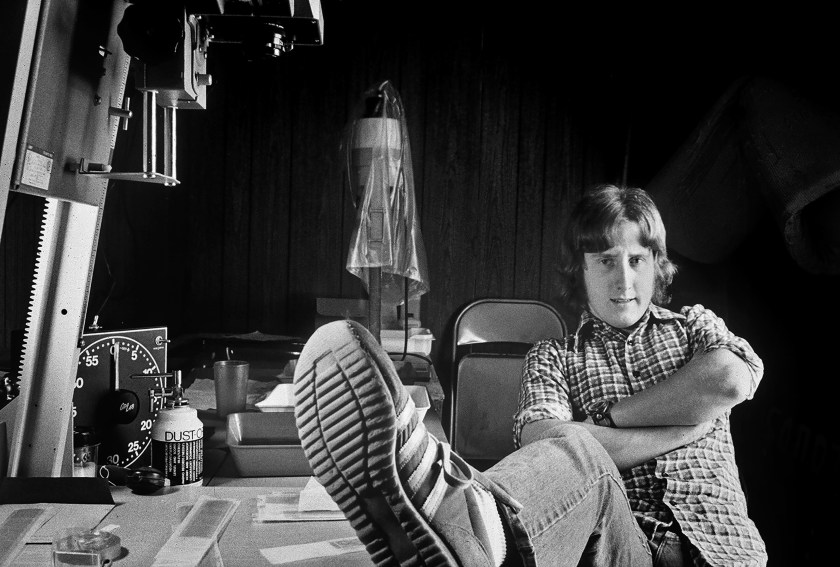
Mark Langford, in his darkroom, 1976. © Mark Langford

The November 11 meeting of the Pagosa Springs Photography Club will be held on-line via Zoom videoconferencing, beginning at 6:30 PM.  Our speaker this month will be Mark Langford. Mark is a graduate of the Brooks Photography Institute, and has been a commercial photographer with his own business for over thirty years. In addition, he has photographed several books about the San Antonio, Texas area. Mark now resides in Pagosa Springs.

Mark’s presentation will be Photography…One lifelong field trip. Join commercial photographer Mark Langford as he reflects on an exciting career capturing a wide range of subjects from his early years in high school through today. From people to buildings and food products, to coffee table books, fine art, and more. Come and relive Mark’s never-ending journey in photography – up close and in person.

This will be a virtual meeting, live on-line, using Zoom video-conferencing. Club members will receive the link for joining the Zoom session by email. If you are new to Zoom and have not yet downloaded it to your computer/tablet/phone, visit the Zoom download page, https://zoom.us/download , to do so. It’s really easy to use. For most of you, all you will need to do is click the “Link to join Zoom meeting”. Non Club members who are interested in taking part may contact Club president Andy Butler for information, at abutler@mac.com

Following Mark’s presentation, we will have our monthly image share. Club members may submit up to five photos to share and discuss. Please email your images for sharing, in JPG format, to abutler@mac.com , no later than November 10. For Zooming, an image size of 2000 tall by 3000 pixels wide, or more, is desirable. 

Update: A video of Mark’s presentation, taken from the Zoom meeting, is available for viewing at: https://www.youtube.com/watch?v=g6DIhR4xw40&t=5s

Planning Landscape Photos

Sunrise, North Window
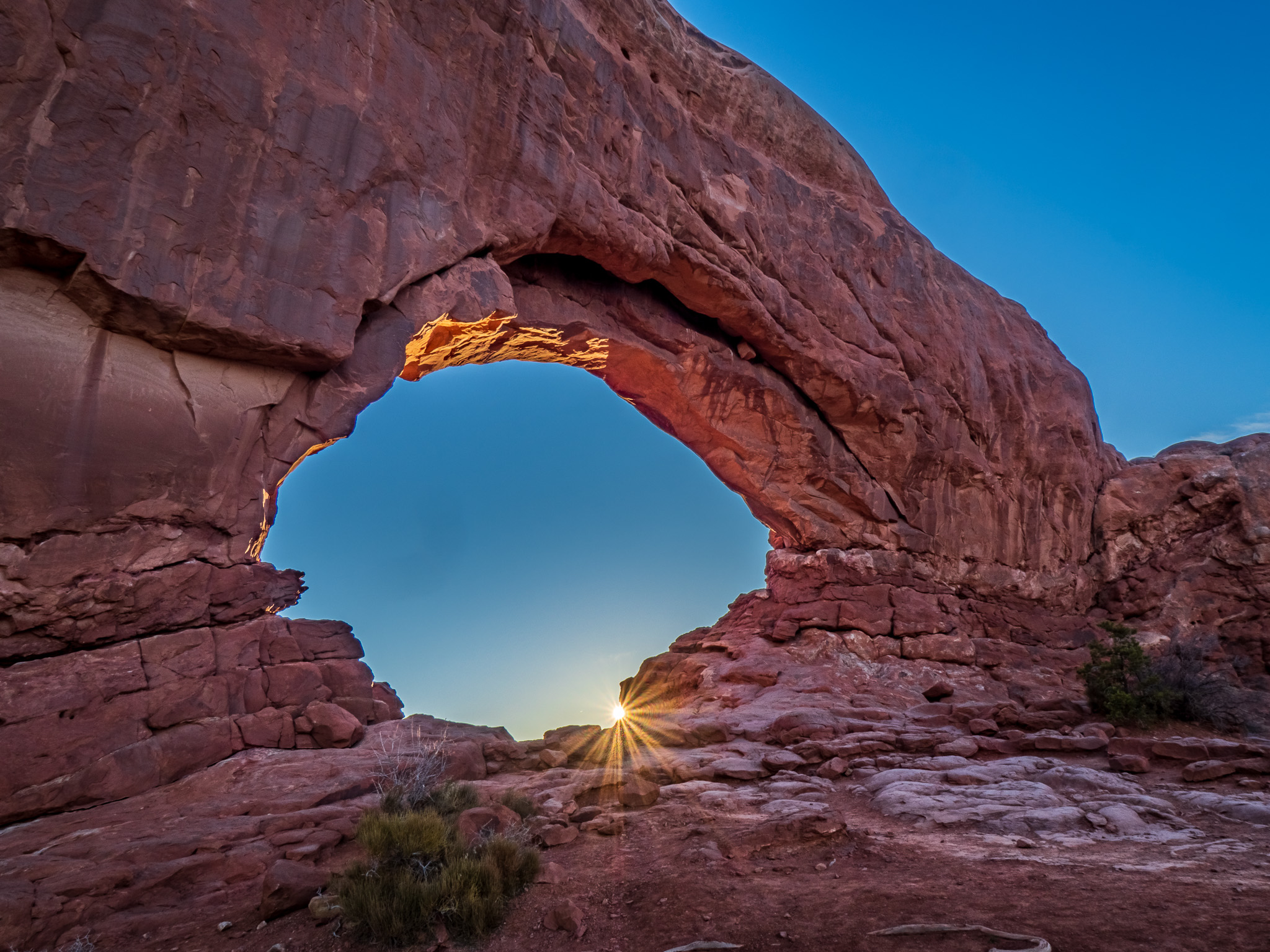
Sunrise, North Window, © Andy Butler

The Pagosa Springs Photography Club will meet virtually, via Zoom videoconferencing, on September 9 at 6:15 PM, Mountain Daylight Time. This month’s presentation will be by Andy Butler, and the topic will be “Using Digital Apps to plan and visualize landscape photos”. 

In landscape photography, the photographer often wants to create an image of a photogenic subject under dramatic light, such as sunrise or sunset; moonrise or moonset. While there are many websites and programs that can provide the times and compass bearing for sunrises and sunsets, there are a few that go beyond this in ways that are very helpful to photographers when planning.  In this presentation, three apps will be discussed and demonstrated: The Photographer’s Ephemeris, PhotoPills, and Sun Surveyor. 

These apps are useful in multiple ways. At home, you can place a pin on a map anywhere in the world, on any desired date, to view how the sun, moon and Milky Way will move throughout the day. You can search for specific events, such as when during the year the sun will rise over Square Top, as observed from a specific point.  In the field, the apps have Augmented Reality features, which allow you to visualize the path of the sun, moon and Milky Way as they move through the sky, against an image of the landscape through your smart phone’s camera.  

Following the program, we will have our usual image share. Club members may submit up to five photos to share. Please email your images for sharing, by September 8, to abutler@mac.com . For Zooming, a larger image size is desirable, 2000 tall by 3000 pixels wide or more. 

Club members will receive the link for joining the Zoom session by email. If you are new to Zoom and have not yet downloaded it to your computer/tablet/phone, visit the Zoom download page, https://zoom.us/download , to do so. It’s really easy to use. For most of you, all you will need to do is click the “Link to join Zoom meeting”. 

Update:  A video of this presentation, recorded from the Zoom meeting, is available for viewing at: https://www.youtube.com/watch?v=VF3oqSnivaw .

Angle

by Joseph T Sinclair

by Joseph T. Sinclair

The classic photographic angle for shooting is 4.7 feet off the ground to 6 feet off the ground; that is, it depends on the height of the standing photographer. Clearly, this angle is not one-size-fits-all. Consequently, you should strive to take photographs from an angle that best suits the subject. The question is, how do you do that?

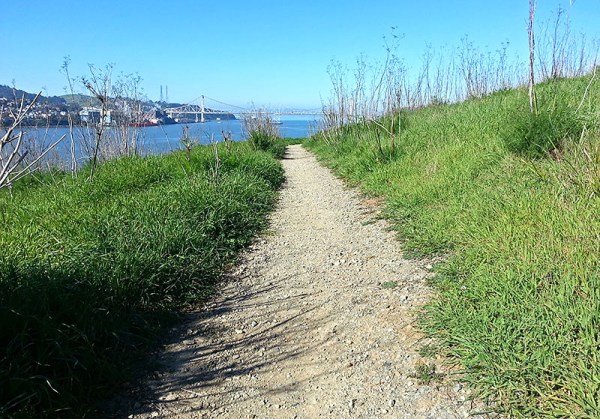
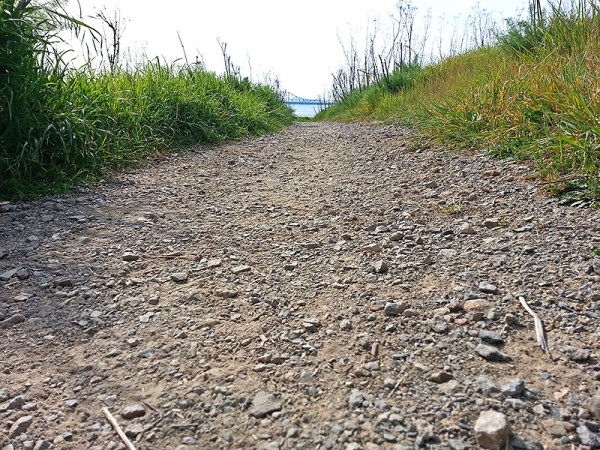
First, always be aware of what the possibilities are. For example, you can easily change the angle just by sitting down and shooting or even lying on your stomach. Such an angle is not appropriate for all photos, but it can add a lot of drama to some photos.
20150304_094610-b

Taken at lower than eyelevel on a trail along the Carquinez Strait
20150321_161349-b

Taken flat on the ground

Second, if you have an articulating LCD screen on your camera,  you can set it so that you can lower your camera at arm’s length or raise your camera at arm’s length to get an extra couple feet for a different angle in your shot. You need to set the articulation, of course, so that you can see the screen while you shoot.

Third. Can you climb on something nearby to get a higher angle shot without being arrested? I don’t advocate jumping on top of someone else’s car, but there may be something nearby that you can climb on safely and get that extra high shot. If you’re doing a well-prepared photo shoot, you can even bring along a stepladder to get a higher shot.

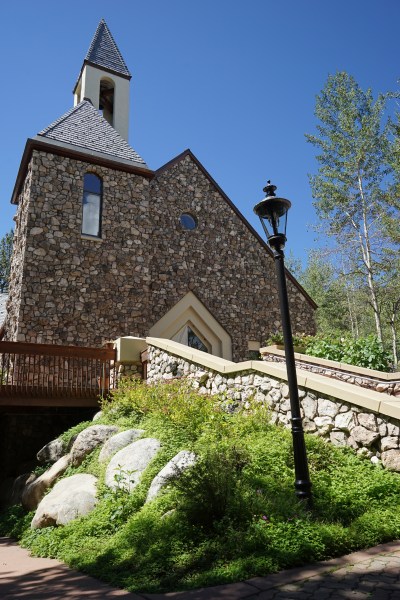
Fourth. Can you find a place where you can get a low shot? I don’t advocate removing manhole covers and climbing down into the sewer to get a street-level shot. But there are plenty of places where you might be able to get significantly downhill from the subject to take a good shot.
DSC02341-d2

Gerald R. Ford memorial nondominational chapel at Beaver Creek, Colorado

Fifth, along a horizontal plane, you can change your angle by moving right or left. It’s usually standing in front of the subject that might be the least interesting. But with a little energy, you might visit each side of the subject to see whether you can get a good side-angle shot that’s better than a front shot.

Sixth, what about a shot from behind? Maybe shooting the subject head on is not your best photo. Maybe getting behind the subject and shooting will give you a better photo or at least an additional worthwhile photo.

DSC08894-q2

A horse of a different angle

Seventh, think of your subject as having a transparent geodesic dome over it and that you can take a photo from any place on the dome that you can reach safely (e.g., by walking, climbing, or drone).

Eighth, consider all the angles that might bring you some additional interest. For instance, if you consider all the angles, you might come with an angle it has a surprising foreground or background that you had not previously perceived. You might see additional subjects that you can include in your photograph that are otherwise not visible from your original shooting angle.

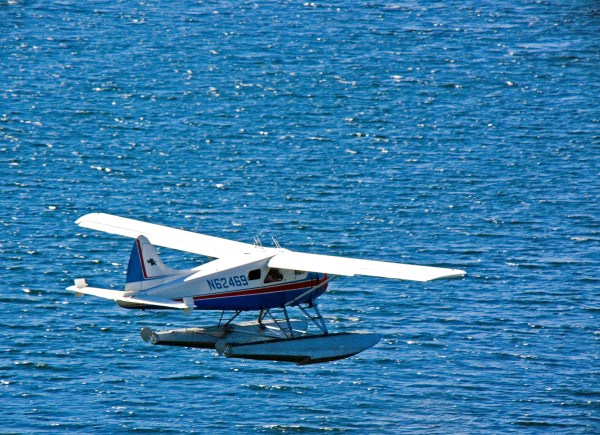
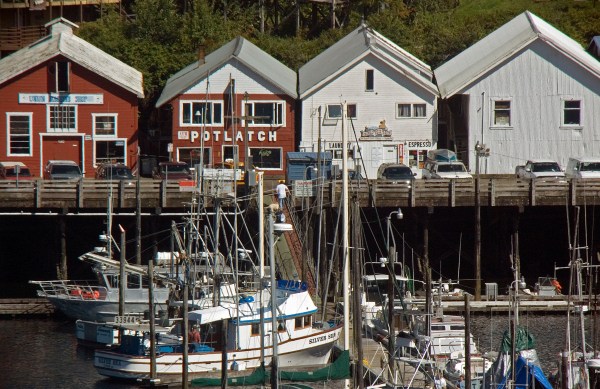
Ninth, when you find yourself at an unusual angle, take full advantage of it while you can. For instance, if you happen to be driving along the top of a hill, stop and take a look to see if there’s a good photograph to be taken of something below.
sinclair-1

sinclair-2

Taken from a cruise ship in Alaska 70 feet above the water

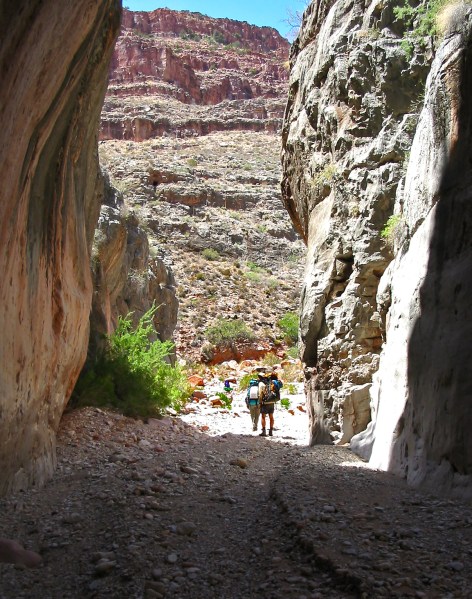
Tenth, dive into the subject (the scene) to look for a photo. I once got to sit in the middle of the Denver Symphony Orchestra while in rehearsal, a great photo-op. For a more pedestrian example, most people go to the Grand Canyon, stand on the rim, and take photos. Sure, you can get some great shots. Never mind the haze in the air from West Coast pollution that’s been there for last 60 years. And when you’re done, you have the same photos that have been on 900 million postcards going back more than a century. But if you take the nearest trail down into the canyon, with each step down you’ll begin to see fantastic photo-ops that you’ve never seen before. It doesn’t matter which trail; you don’t have to go very far; and most of the tourist trails are not difficult. It’s the same world from a different angle. The different angle yields original new images.
Rotation of 100-0096_IMG-d

On a trail in the Grand Canyon below the rim

Finally, think ahead and go prepared. For instance, if you’re going to shoot flowers for several hours and be on your knees much of the time doing so, take along some knee pads. If you going to shoot insects laying on your stomach for a considerable time, take along a blanket to lay on. If you’re going to climb a hill to get a good angle, wear some sturdy shoes or hiking boots.
Luminosity & Color Masking in Lightroom, July 8

_O9A0571
Fisher Towers, © Doug Coombs

The July 8 meeting of the Pagosa Springs Photography Club will be held at 6:15 p.m., on-line via Zoom videoconference. We welcome back Doug Coombs, who will give a presentation on Luminosity Masking in Lightroom.  

Adobe Lightroom added the capability to use luminosity and color to target local adjustments using the Gradient, Brush, and Radial tools in 2018 using the “Range Mask”. This enables the photographer to make precisely targeted adjustments to selected areas of a photograph. Think of it as dodging and burning, contrast adjustments, color adjustments and other post processing techniques on steroids. Doug will demonstrate how to use the Lightroom Brush and Gradient tools with and without the Range Mask. We may even distribute a photograph to the audience that Doug will process in Zoom and Lightroom while the audience opens Lightroom on their computers to perform the same adjustments. Everything Doug will show in Lightroom can also be done in Adobe Camera Raw, for those you only own a recent version of Photoshop. For a video tutorial on these controls, check out Matt Kloskowski’s blog post on the subject, at:  https://mattk.com/lightrooms-most-powerful-masking-tools/  .

Doug is the chair and co-founder of the Los Alamos Adobe Users Group in New Mexico and a former chair of the Los Alamos Photography Club. He has been doing photography since high school, worked as a photographer and dark room tech in college, and fell in love with digital photography in 2003. Doug is primarily a landscape and nature photographer, with an affinity for birds and wildlife. He now splits his time between Los Alamos, Pagosa Springs, and a generous amount of travel to various photogenic destinations.

This will be a virtual meeting, live on-line, using Zoom video-conferencing. You may participate in the program from the comfort and safety of your own home. Photography Club members will receive a Club email containing the Zoom weblink to participate in Doug’s presentation. Members may also submit up to five photos to share, following Doug’s talk. Others who are interested in taking part in the Zoom meeting may contact Club president Andy Butler for information, at abutler@mac.com . 

The Pagosa Springs Photography Club promotes educational, social and fun interactions between any and all who enjoy making and viewing great photography. Annual membership dues are just $25. For membership information visit our website at https://pagosaspringsphotoclub.org/about/ 

June Program: From Field to Framed

2 - eagle
Eagle in Flight, © Chris Roebuck

The Pagosa Springs Photography Club will next meet by Zoom video-conference on Wednesday June 10 at 6:15 p.m. Our speaker will be Chris Roebuck. His topic is Highlights from a photographer’s education: From field to framed. In his program, Chris will discuss why he photographs, how he uses the language of photography to tell a story, and how he takes his images from an encounter in the field to a framed print. 

Chris Roebuck has been a member of the Photography Club for several years. He began his digital imaging education nine years ago by attending a community college (Lansing Community College). There, Chris learned Photoshop in-depth. After 2 ½ years he went to the Rocky Mountain School of Photography, in Missoula, Montana, to learn Lightroom. That same year he attended printing workshops at Maine Media Workshops and College.  Chris has continued to attend photographic workshops every year since.  He is a firm believer in continuing education.  Chris takes a philosophical approach to his photography rather than an artistic one.  He is primarily a wildlife photographer, and hopes to always be a student of the photographic arts.

2.3 - MaineFox
Maine Fox, © Chris Roebuck

This will be a virtual meeting, live on-line, using Zoom video-conferencing. You may participate in the program from the comfort and safety of your own home. Photography Club members will receive a Club email containing a Zoom weblink to participate in Chris’s presentation. Members may submit up to five photos to share. This month’s theme is “Animals”. Others who are interested in taking part in the Zoom meeting may contact Club president Andy Butler for information, at abutler@mac.com. 

The Pagosa Springs Photography Club promotes educational, social and fun interactions between any and all who enjoy making and viewing great photography.  The club sponsors educational programs, themed challenges, contests and outings to help photographers develop their skills. Non-members are invited to attend a meeting to learn more about the club. Annual membership dues are just $25. For membership information visit our website at https://pagosaspringsphotoclub.org/about/ .