Angle

by Joseph T Sinclair

by Joseph T. Sinclair

The classic photographic angle for shooting is 4.7 feet off the ground to 6 feet off the ground; that is, it depends on the height of the standing photographer. Clearly, this angle is not one-size-fits-all. Consequently, you should strive to take photographs from an angle that best suits the subject. The question is, how do you do that?

First, always be aware of what the possibilities are. For example, you can easily change the angle just by sitting down and shooting or even lying on your stomach. Such an angle is not appropriate for all photos, but it can add a lot of drama to some photos.
20150304_094610-b

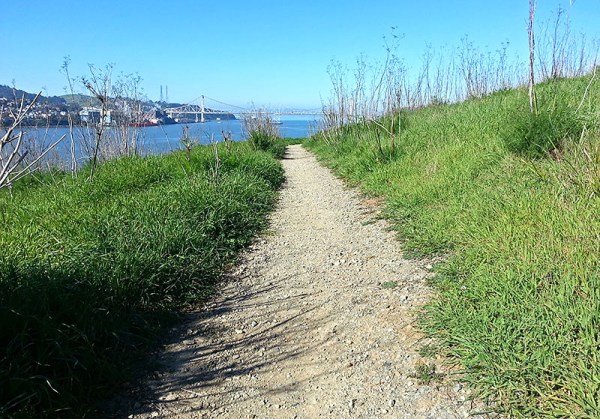
Taken at lower than eyelevel on a trail along the Carquinez Strait
20150321_161349-b

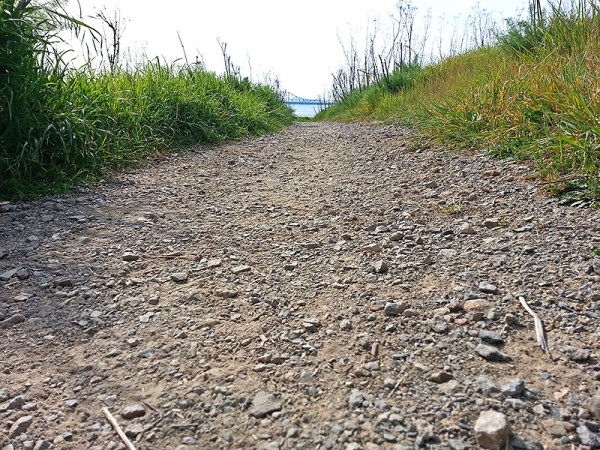
Taken flat on the ground

Second, if you have an articulating LCD screen on your camera,  you can set it so that you can lower your camera at arm’s length or raise your camera at arm’s length to get an extra couple feet for a different angle in your shot. You need to set the articulation, of course, so that you can see the screen while you shoot.

Third. Can you climb on something nearby to get a higher angle shot without being arrested? I don’t advocate jumping on top of someone else’s car, but there may be something nearby that you can climb on safely and get that extra high shot. If you’re doing a well-prepared photo shoot, you can even bring along a stepladder to get a higher shot.

Fourth. Can you find a place where you can get a low shot? I don’t advocate removing manhole covers and climbing down into the sewer to get a street-level shot. But there are plenty of places where you might be able to get significantly downhill from the subject to take a good shot.
DSC02341-d2

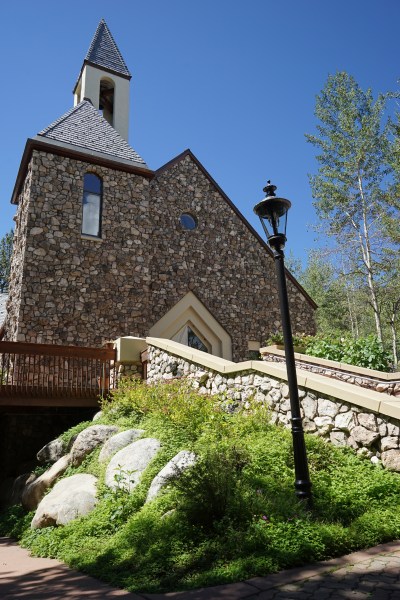
Gerald R. Ford memorial nondominational chapel at Beaver Creek, Colorado

Fifth, along a horizontal plane, you can change your angle by moving right or left. It’s usually standing in front of the subject that might be the least interesting. But with a little energy, you might visit each side of the subject to see whether you can get a good side-angle shot that’s better than a front shot.

Sixth, what about a shot from behind? Maybe shooting the subject head on is not your best photo. Maybe getting behind the subject and shooting will give you a better photo or at least an additional worthwhile photo.

DSC08894-q2

A horse of a different angle

Seventh, think of your subject as having a transparent geodesic dome over it and that you can take a photo from any place on the dome that you can reach safely (e.g., by walking, climbing, or drone).

Eighth, consider all the angles that might bring you some additional interest. For instance, if you consider all the angles, you might come with an angle it has a surprising foreground or background that you had not previously perceived. You might see additional subjects that you can include in your photograph that are otherwise not visible from your original shooting angle.

Ninth, when you find yourself at an unusual angle, take full advantage of it while you can. For instance, if you happen to be driving along the top of a hill, stop and take a look to see if there’s a good photograph to be taken of something below.
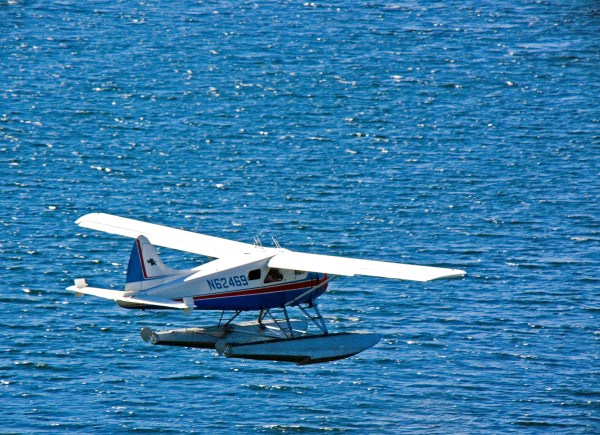
sinclair-1

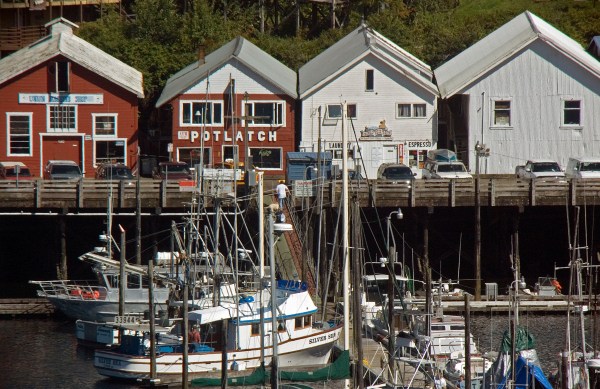
sinclair-2

Taken from a cruise ship in Alaska 70 feet above the water

Tenth, dive into the subject (the scene) to look for a photo. I once got to sit in the middle of the Denver Symphony Orchestra while in rehearsal, a great photo-op. For a more pedestrian example, most people go to the Grand Canyon, stand on the rim, and take photos. Sure, you can get some great shots. Never mind the haze in the air from West Coast pollution that’s been there for last 60 years. And when you’re done, you have the same photos that have been on 900 million postcards going back more than a century. But if you take the nearest trail down into the canyon, with each step down you’ll begin to see fantastic photo-ops that you’ve never seen before. It doesn’t matter which trail; you don’t have to go very far; and most of the tourist trails are not difficult. It’s the same world from a different angle. The different angle yields original new images.
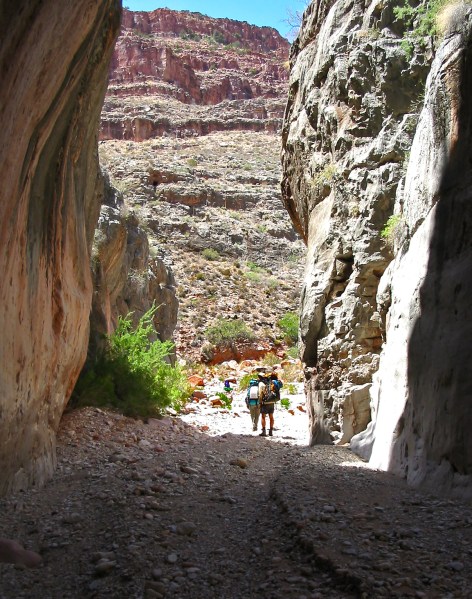
Rotation of 100-0096_IMG-d

On a trail in the Grand Canyon below the rim

Finally, think ahead and go prepared. For instance, if you’re going to shoot flowers for several hours and be on your knees much of the time doing so, take along some knee pads. If you going to shoot insects laying on your stomach for a considerable time, take along a blanket to lay on. If you’re going to climb a hill to get a good angle, wear some sturdy shoes or hiking boots.
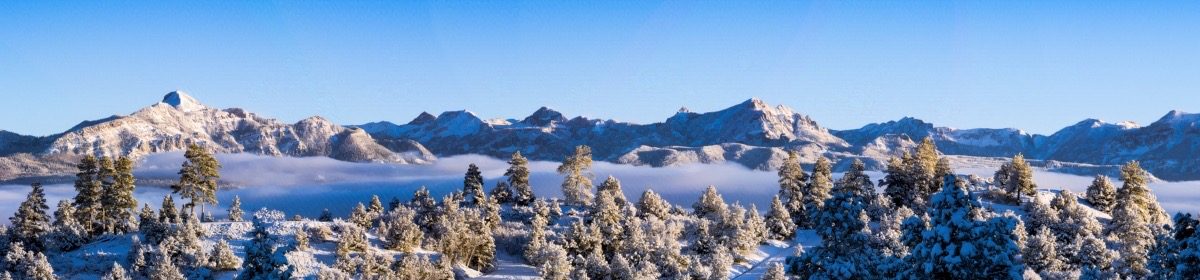
June Program: From Field to Framed

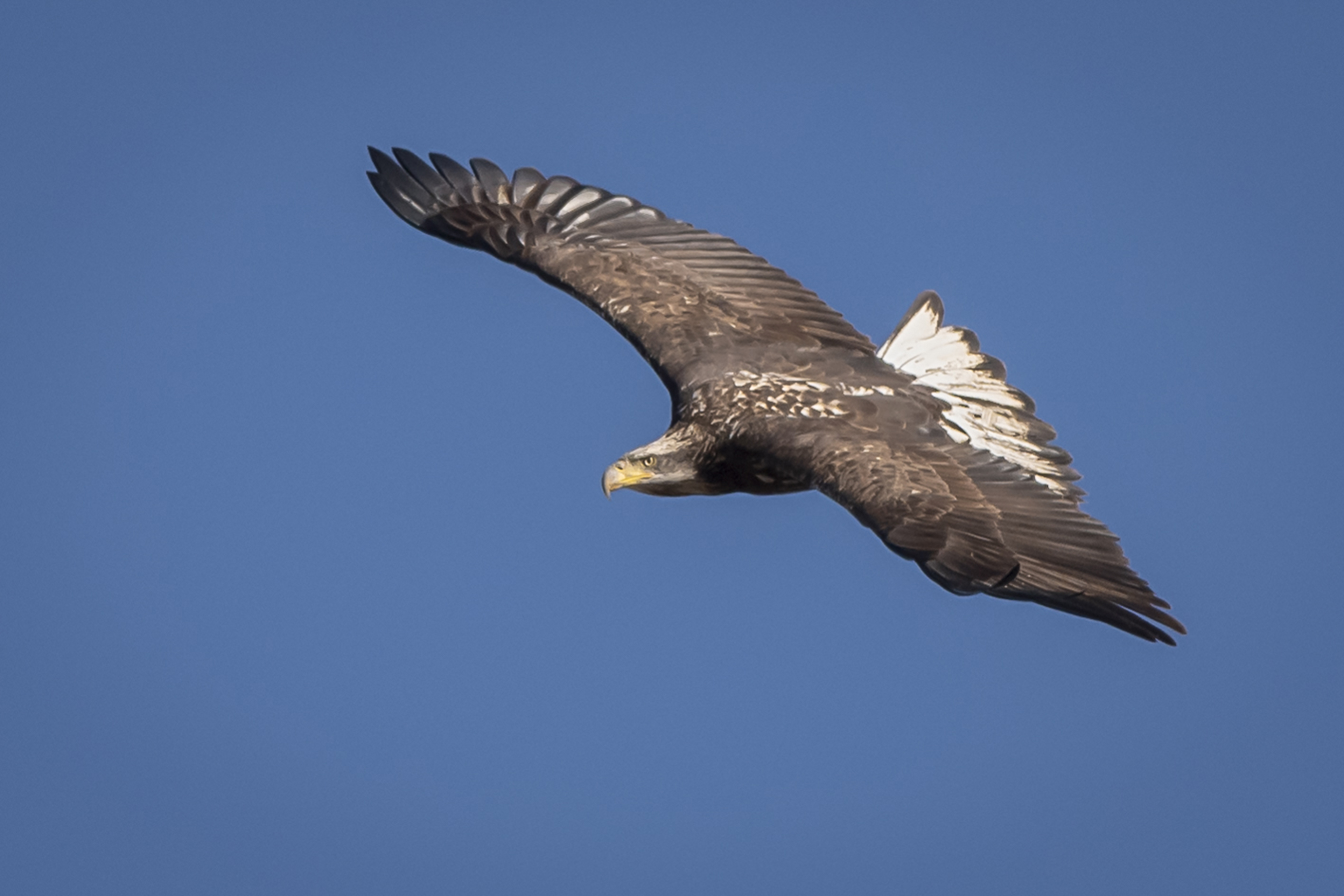
2 - eagle
Eagle in Flight, © Chris Roebuck

The Pagosa Springs Photography Club will next meet by Zoom video-conference on Wednesday June 10 at 6:15 p.m. Our speaker will be Chris Roebuck. His topic is Highlights from a photographer’s education: From field to framed. In his program, Chris will discuss why he photographs, how he uses the language of photography to tell a story, and how he takes his images from an encounter in the field to a framed print. 

Chris Roebuck has been a member of the Photography Club for several years. He began his digital imaging education nine years ago by attending a community college (Lansing Community College). There, Chris learned Photoshop in-depth. After 2 ½ years he went to the Rocky Mountain School of Photography, in Missoula, Montana, to learn Lightroom. That same year he attended printing workshops at Maine Media Workshops and College.  Chris has continued to attend photographic workshops every year since.  He is a firm believer in continuing education.  Chris takes a philosophical approach to his photography rather than an artistic one.  He is primarily a wildlife photographer, and hopes to always be a student of the photographic arts.

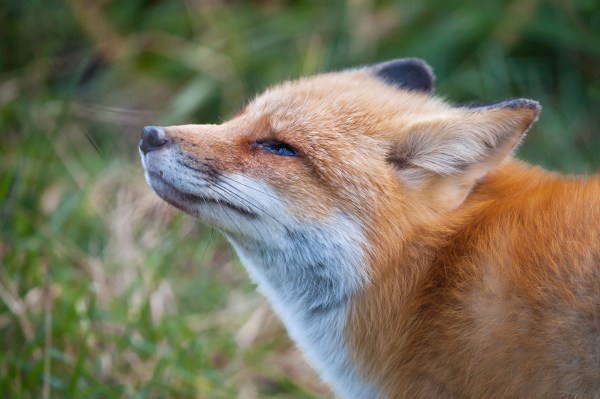
2.3 - MaineFox
Maine Fox, © Chris Roebuck

This will be a virtual meeting, live on-line, using Zoom video-conferencing. You may participate in the program from the comfort and safety of your own home. Photography Club members will receive a Club email containing a Zoom weblink to participate in Chris’s presentation. Members may submit up to five photos to share. This month’s theme is “Animals”. Others who are interested in taking part in the Zoom meeting may contact Club president Andy Butler for information, at abutler@mac.com. 

The Pagosa Springs Photography Club promotes educational, social and fun interactions between any and all who enjoy making and viewing great photography.  The club sponsors educational programs, themed challenges, contests and outings to help photographers develop their skills. Non-members are invited to attend a meeting to learn more about the club. Annual membership dues are just $25. For membership information visit our website at https://pagosaspringsphotoclub.org/about/ .

Antarctica-May 13 Presentation

The May program of the Pagosa Springs Photography Club will be held on Wednesday the 13th at 6:15 p.m, Mountain Daylight Time. This will be a virtual meeting, live on-line, using Zoom video-conferencing, consistent with Colorado’s current “safer at home” rules. You will be able to participate in the program from the comfort and safety of your own home. Our speaker will be Frank Comisar, whose topic is Expedition to Antarctica. Frank will show photos and videos of the wildlife and amazing scenery of Antarctica, taken on a recent cruise to the ice continent. Further, he will explain the logistics and daily routines of his trip, and considerations involved in planning for a cruise to Antarctica. Photography Club members will receive a Club email containing a Zoom weblink to participate in Frank’s presentation. Others who are interested in taking part may contact Club president Andy Butler for information, at abutler@mac.com. 

Frank Comisar is the founder of Scenic Aperture Gallery in Durango, and is a well-known wildlife and nature photographer. Frank travels throughout North America making beautiful photographs for his Durango gallery and leading small group photography workshops emphasizing landscape and nature photography.

Influenced by a previous career in Architecture, Frank’s images are well known for artistically depicting our three-dimensional world in a two dimensional medium. Frank learned early in his architecture career that “. . . the creative process is not a destination but a journey. It is a journey that includes research, planning, timing, technical skills, creative judgment, and a bit of good luck.” Frank’s success as a photographer is founded on these principles.

The Pagosa Springs Photography Club promotes educational, social and fun interactions between any and all who enjoy making and viewing great photography.  The club sponsors educational programs and outings to help photographers hone their skills, whether novices or enthusiasts. Non-members are invited to attend a meeting to learn more about the club. For membership information visit our website at https://pagosaspringsphotoclub.org/about/ .

April Dark Skies

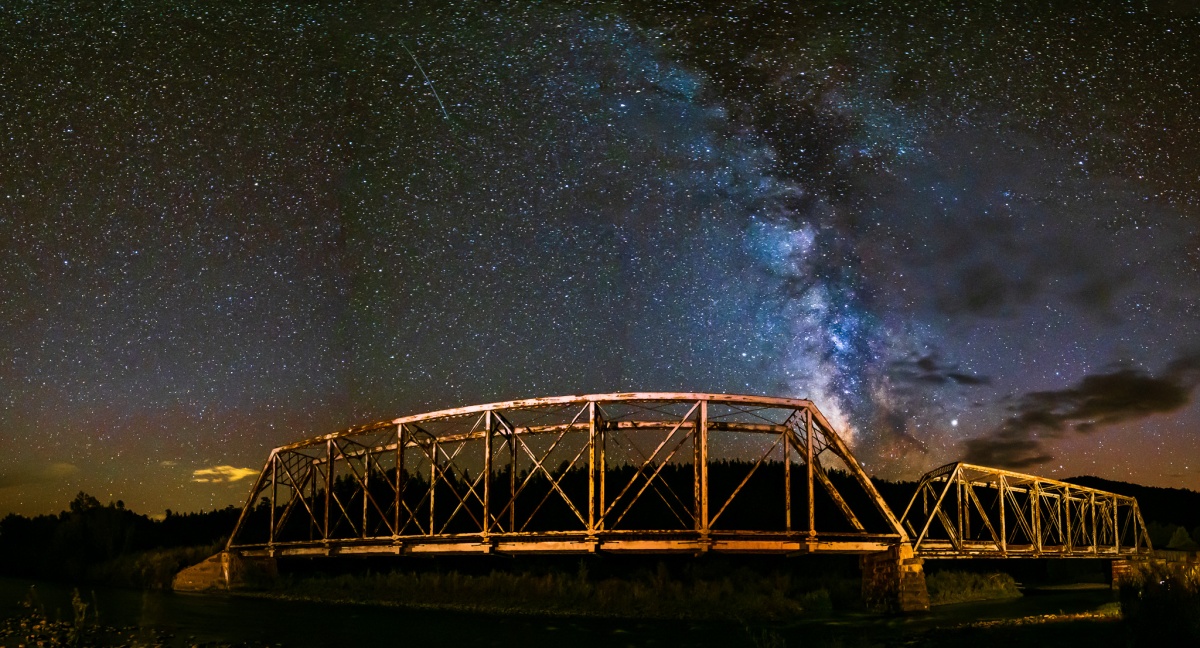
Spring in the northern hemisphere is the beginning of Milky Way season, when the Galactic Center is above the horizon at night. Although the Milky Way can be photographed anytime of the year when the sky is dark enough, the region around the Galactic Center contains the most detail and so is more photogenic. Spring is also the time when the Milky Way can be seen as a full arch, low enough in the horizon to photograph with some landscape visible. Fortunately, many of us in the Pagosa Springs area live where skies are dark enough that we can photograph the Milky Way without traveling, so it could be a good subject while we are “staying at home”.

In April 2020, opportunities to photograph the Milky Way from Pagosa Springs, without interference from the Moon, begin on the 14th and last into the first couple of days of May. The new moon will be April 22, so the best dark sky conditions and longest time for viewing the Milky Way would be a couple of days on either side of the 22nd. During this period, you could photograph the Milky Way from around 1 a.m. until shortly before dawn, about 4:45 a.m.. For details, see any of a number of apps, such as PhotoPills, Sun Surveyor, or The Photographer’s Ephemeris, desktop programs such as Stellarium. 

Night sky photography isn’t just about the Milky Way. A classic method of photographing the night sky is to make very long exposures which show the motion of the stars as star trails. As with any night scape photography, the best images will also have a strong foreground, perhaps illuminated by the waning moon, low level LED light panels, or by light painting with a flashlight. For tips and references on start trail photography, see this post. 

Also coming up next week is the Lyrid meteor shower, which should be active beginning April 19, and  peak in the predawn hours of April 22 this year. However, you should be able to see some activity of the Lyrid any dark night from April 10 through 23, with up to 10-15 meteors per hour. The Lyrid shower occurs every spring, and if the skies are dark and clear, it can be one of the best meteor showers of the year. Fortunately, with the new moon on the 22nd, there should be excellent viewing of the Lyrids this year. To photograph the Lyrids, all you need is a clear, dark sky, wide angle lens, camera and intervalometer (built in or external) and lots of patience. For an excellent introduction to techniques for photographing meteor showers, see this article by Glenn Randall.

If you are sheltering in place, don’t live in a dark sky area, or just are not into going outside to photograph the Milky Way in the wee hours, here is an indoor activity.  The week of April 19 to 26 has been designated as International Dark Sky Week by the International Dark Sky Association, with the goal of reconnecting people around the world with our night sky. On their website, https://idsw.darksky.org , you can find a variety of virtual presentations that you can watch each day of that week. Topics include the relationship between humans and the night sky through history, basic astronomy, and art and conservation. Some of the presentations are stories about the night sky, appropriate for kids. You can also follow these and other presentations of the IDSA on their Youtube channel.

Happy star gazing!

April Meeting Canceled

Oh, the lovely fickleness of an April day!  —  W. H. Gibson

Because of State of Colorado and local health orders related to the Covid-19 pandemic, the Pagosa Springs Photography Club will not be holding our regular monthly meeting on April 8. We will also not be doing any in-person group outings during April. 

We encourage our members to continue to practice their craft and develop their photographic skills. There are plenty of photographic opportunities near, and in, your homes. Just use your imagination, and maintain appropriate social distance. This is also a great time to make sure your backups are up to date, to make a few prints, or to develop your post-processing skills. Learn something new and different. Several on-line learning sources have made their content free for the time being. These include:

Professional Photographers of America, (https://www.ppa.com/education-unlocked)

KelbyOne: (https://kelbyone.com/free)

Nikon School: (https://www.nikonevents.com/us/live/nikon-school-online/)

Continuing to be creative and engaged can be a huge emotional boost while you are staying home to stay healthy. Also, consider taking part in our on-line Photography Club Shutter Therapy challenges. The first week (through April 6) is on the theme “Spring.” To view or participate, check out our Facebook page at https://www.facebook.com/PagosaPhotoClub/ and view the photos in the comments of the March 29 post on Spring Shutter Therapy. 

Spring Photography

The beautiful spring came; and when Nature resumes her loveliness, the human soul is apt to revive also. –Harriet Ann Jacobs

I was surprised to note that the vernal equinox, the official start of spring in the northern hemisphere, comes on March 19 this year (In the USA). That’s early. Typically the first day of spring is the 20th or 21st of March. Indeed, according to The Old Farmer’s Almanac, this is the earliest spring equinox since 1896!  It turns out that this is due to quirks in our calendar system related to leap year (and leap century). And as a result of these quirks, spring will begin on March 19 every leap year this century. 

Given how early the vernal equinox is this year, perhaps I should not have been surprised (but was, at least a little) to have 7 inches of new snow on the first day of spring. That’s the heaviest single snow fall we’ve had, at our house, during this somewhat dry winter! It was just a little reminder that here in the Rocky Mountains,  spring doesn’t always pay strict attention to the calendar. Still, this is a good time for a post about spring photography. 

Although we have many great opportunities for landscape and nature photography in the winter here in the southern Rockies, there is no question that the new life associated with Spring makes it a joy to photograph this time of year. The grass is green, one of the most evocative colors for humans. Birds and mammals are migrating. Flowers are beginning to bloom. And, given our altered way of life in the era of COVID-19, it is fortunate that there is still a lot of photography that we can do locally, often in our own backyards, this time of year

In a recent video, Photo Tom explores 9 tips and ideas for spring landscape photography. It’s worth watching to revisit some ideas for the season. One that I think is big, is to look for the transition time between seasons. The snow this week may present opportunities for photographing the contrast of flowers, for example, in snow. Other ideas include taking advantage of the bright green of spring foliage, weather patterns, and foggy mornings. Check the forecasts for the day after storms move through. Cool mornings after a storm will likely produce fog in the valleys, especially around our hot springs. Fog creates opportunities for interesting, moody photos. If you are on a ridge above valley fog, you may have a dramatic sunrise. Later in spring, as the snow melts from the high country, waterfalls and streams will be flowing strongly, making for excellent photographic opportunities. For more ideas about spring subjects, as well as composition and lighting tips to take advantage of them, check out this post by Larry Price.

Of course, one of the highlights of spring are the blooming flowers.  Anne Belmont is a creative flower photographer, and shares a number of good ideas for unique, artistic flower photos in a two part series. These articles are full of ideas, including  seeing flowers uniquely, and suggestions for creative aperture and composition  When thinking about flowers, as well as other spring subjects such as butterflies, you’ll want to think Macro. Macro photography is easily done in your own back yard (or even inside) and can be very rewarding in terms of training your eye to see textures and patterns Lee Hoy has some good suggestions for getting started .  

There are plenty of subjects worthy of a photographer’s attention in the spring. So take advantage of the season to practice your photography, but be safe about it!