March Night Sky

March is a transition month. Here in the Northern Hemisphere, the long dark nights of Winter are quickly giving way to longer days. Night sky photographers can look forward to the reappearance of the Milky Way core in March. But there are other potential events worthy of photographing, or just viewing, in the early Spring night sky. 
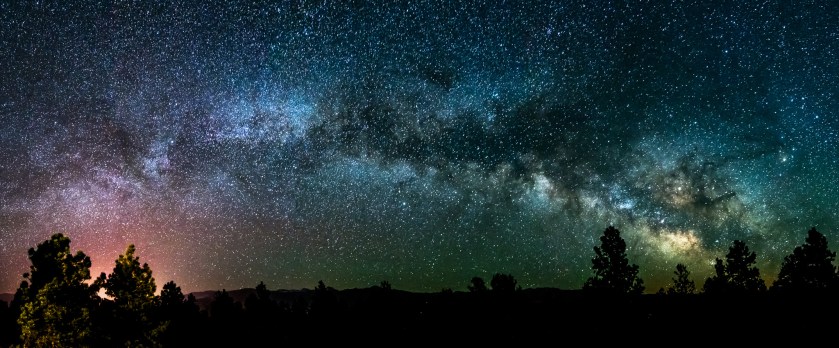
The Milky Way arching over the South San Juan Mountains (May, 2017). The pink glow on the left is from the town of Pagosa Springs, Co. Stitched panorama from 12 individual photos.

First though, the Milky Way. While our home galaxy is visible year round, beginning in March, the Galactic Center, the Milky Way “core” will be visible. This is perhaps the most dramatic and photogenic portion of our galaxy. The first prerequisite for good Milky Way viewing is a relatively dark sky, so we will need to wait until the recent Full Snow Moon wanes. Starting March 8, there will be periods in which the Galactic Center will be above the horizon with no moon interference in the early morning hours. Best viewing should be from March 9 through the 23rd, when the core will be visible in the hours before dawn. On the night of the new moon, March 13, the viewing time will be from about 2:39 until 4:54 AM (the beginning of astronomical dawn). After the switch to daylight savings time on the 14th, this window moves to 3:35 to 5:53 AM, which somehow seems a bit less onerous. The reward for early risers in Pagosa Springs will be a view of the Milky Way arching over the South San Juan Mountains. Spring is the best time of the year to see the full arc of the Milky Way, and in early spring it will be lower in the sky, allowing for better images of the landscape beneath the arc. 

There are other opportunities among the planets, and the stars. In the predawn hours of March 6 (and a few days before and after) is a good opportunity to see Mercury as it will reach its greatest western elongation from the sun. At about 5:25, Mercury will rise in the east and reach about 12° above the horizon before fading in the brightening sky. But it gets better, as Mercury will be within about a degree of the gas giant, Jupiter, and nicely aligned with Saturn as well. By March 9, Mercury will be much closer to the horizon (and more difficult to find), but Jupiter and Saturn will be joined by a young crescent moon. These will be close enough to the horizon to afford good nightscape opportunities. 
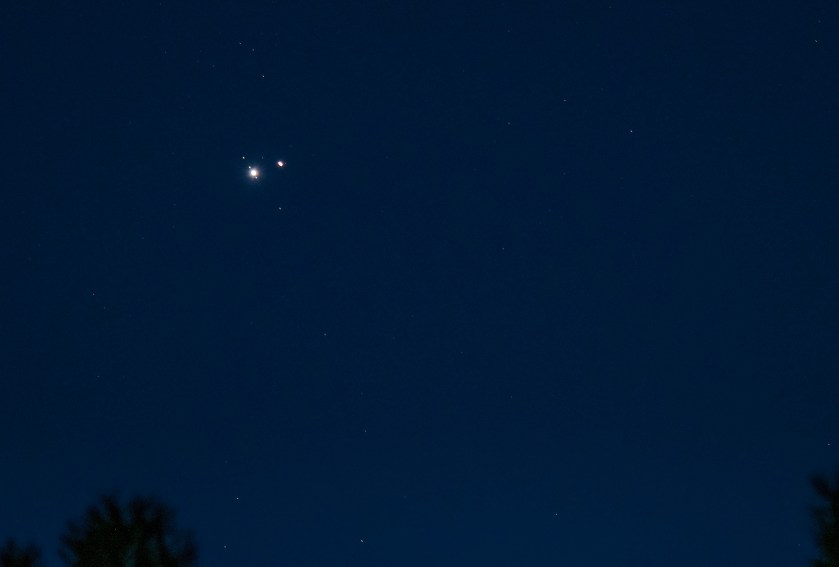
Jupiter and Saturn at their great conjunction on December 21, 2020. Also visible are Jupiter’s four Galilean moons. Exposure was at 1 second, f/2.8, 150 mm using an Olympus OMD EM1-Mk II (300 mm full frame field of view)

Meanwhile, Mars will be much higher in the sky, but will be quite close to the Pleiades open cluster in the evening sky. 

As winter turns to spring, so the winter constellations will gradually disappear. But in the late evenings of March, you can still find Orion and other familiar winter constellations. Look to the west a little before midnight, and Orion, and the bright star Sirius of Canis Major, will be low enough over the horizon to the west-southwest for nightscape photography. You might also look for the Winter Hexagon, featuring Sirius, Rigel , the Hyades, Capella, Pollux and Procyon in Canis Minor. 
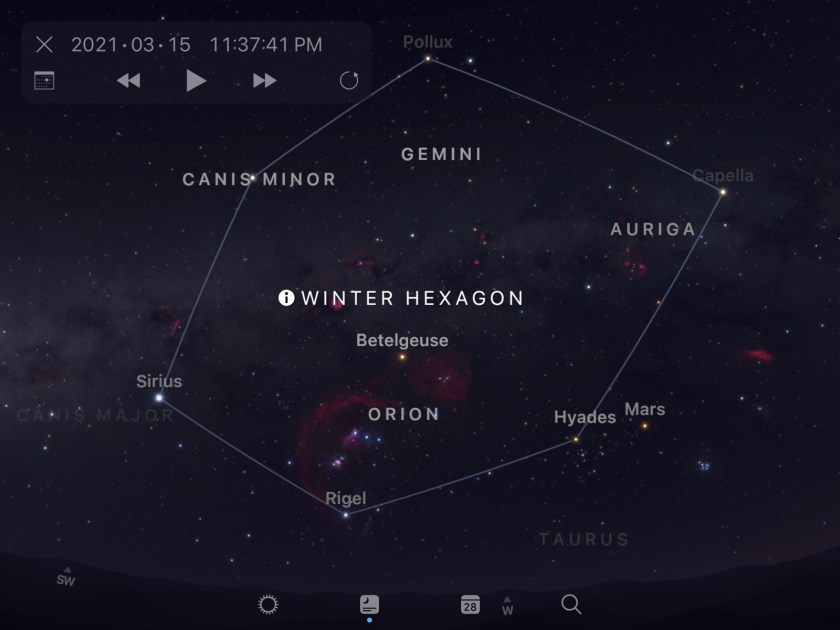
Orion and the Winter Hexagon, as would be seen looking West-Southwest on March 15, around 11:40 PM, from Pagosa Springs. Screen capture from Sky Guide.

Finally, moonless evenings in early spring are the best time of the year to see zodiacal light in the Northern Hemisphere. Zodiacal light looks like a hazy triangle in the west, as darkness falls. Look for it along the path of the ecliptic. Find out more about zodiacal light at https://earthsky.org/tonight/zodiacal-light-is-glowing-pyramid-in-west-after-dark . By the way, I recommend EarthSky as a great website to keep up with heavenly happenings. To predict the locations of stars and planets, there are several great programs, including the free Stellarium, or apps such as Star Walk or Sky Guide for smart phones.  

Beyond the beginnings of “Milky Way season”, March skies have a lot to offer. Good viewing to you!
December Dark Sky Events

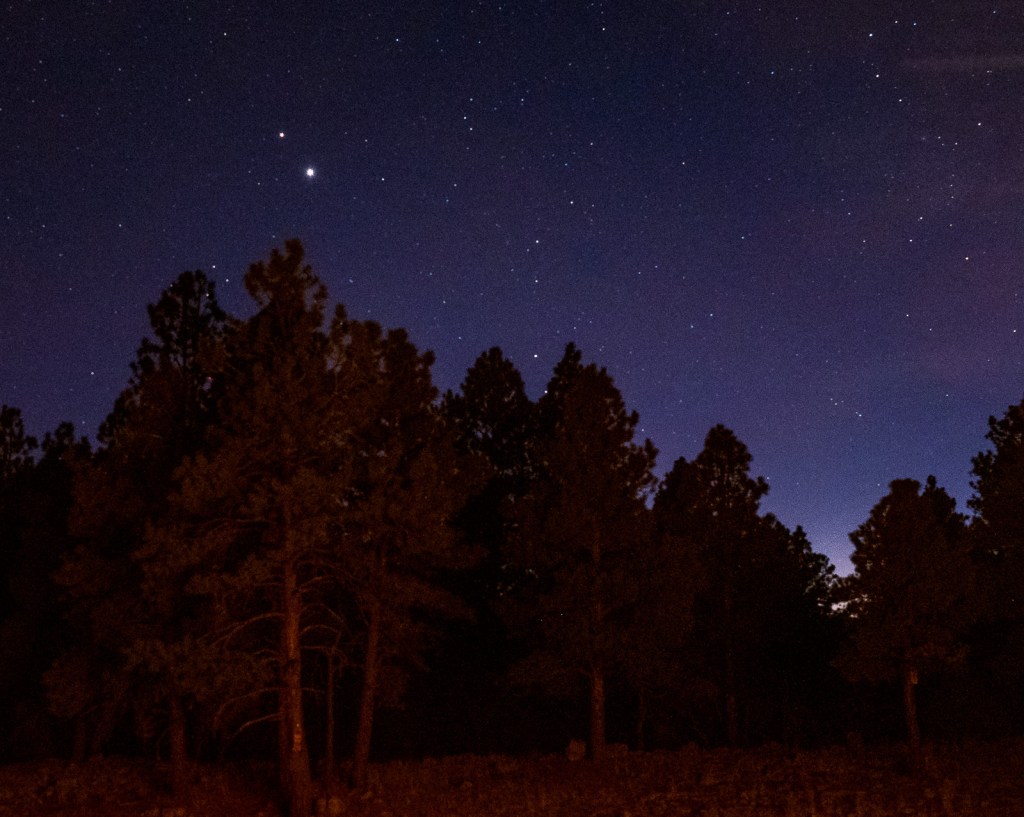
Saturn and Jupiter in the evening sky over Pagosa Springs, Dec 5, 2020 © Andy Butler

As we move towards the shortest day of the year, it’s a good time to think of night photography. There are a couple of significant events coming up that could be of interest to both photographers and stargazers. 

First, the Geminid meteor shower, one of the most reliable meteor showers of the year, will reach it’s peak on the night of Dec. 13-14. With the new moon on Dec 14, skies should be dark enough to see quite a few meteors. However, you should be able to see meteors any night beginning this weekend (Dec. 4).The Geminids appear to radiate from the constellation Gemini, which conveniently is above the horizon before midnight in December. The maximum activity should be after midnight in the early morning of December 14, with up to 75 meteors per hour visible. The Geminids are one of only a couple of major showers derived from an asteroid, 3200 Phaeton, rather than a comet. Look to the east for this shower. 

For best viewing of the Geminids or other meteor showers, find a relatively dark site. If you want to photograph a meteor shower, there are a few things to keep in mind. First, the number of meteors “visible” includes the entire sky, while even a very wide-angle lens is not likely to cover more than 1/3 of the night sky. So you are unlikely to capture more than one shooting star even in a minute-long exposure. Second, if you want to keep the stars as points of light, rather than streaks, you will need to limit your exposure time. A rule of thumb is to limit exposure times to 500 divided by your lens focal length (in full-frame equivalent). So, if you have a 16 mm lens (full frame) then 500/16 is roughly 30 seconds. If you think you will be making large prints from your photos, you should be more conservative, maybe using 20 seconds in this example. A good starting point is to set your aperture to f/2.8, shutter speed 30 seconds, and ISO 6400; basically the same as you would use for Milky Way photos. To increase your chances of getting one or more photos that contain a shooting star, set up your camera to automatically take these 30 second exposures for several hours during the night. To do this, either use your camera’s built in intervalometer, or an external cable release with intervalometer. If you have chosen an interesting foreground subject in the landscape (you should!), it would be good to either take a longer exposure of it, or to take a separate photo of the landscape using light-painting or low level lighting. Back home, check all the photos to find the ones with meteors streaking through the sky. For a dramatic image, you can composite these with your landscape image using Photoshop or another editor. For a very thorough discussion of photographing and processing meteor showers, see: https://www.photopills.com/articles/meteor-shower-photography-guide 

Another event coming up will be a Great Conjunction of Jupiter and Saturn on Dec. 21. Jupiter and Saturn have been appearing closer and closer to one another this fall. Shortly after sunset, around 5:24 PM on the Dec. 21, these gas giants will be visible about 17° above the horizon in the Southwest. They will be within 0.1° of each other, or about 1/5 the apparent diameter of the moon. This is considered to be a “Great Conjunction”, as it happens only about once every 20 years. And in 2020 these planets will appear closer together than they have for about 800 years. The best viewing will be just at the end of civil twilight, so lighting should be good. You can observe these planets near one another on any clear night in December, as they appear closer and closer.  In fact, a few days before the conjunction, on December 16 or 17, you should also be able to see the new Moon very close to the two planets. For information, and some inspirational photos, see https://earthsky.org/todays-image/jupiter-saturn-photos-drawing-closer-conjunction-dec21-2020 .

Angle

by Joseph T Sinclair

by Joseph T. Sinclair

The classic photographic angle for shooting is 4.7 feet off the ground to 6 feet off the ground; that is, it depends on the height of the standing photographer. Clearly, this angle is not one-size-fits-all. Consequently, you should strive to take photographs from an angle that best suits the subject. The question is, how do you do that?

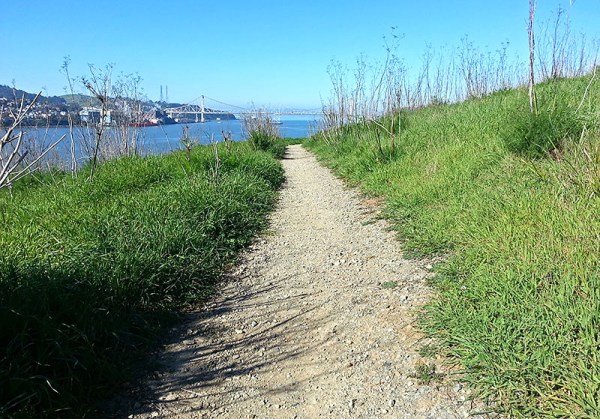
First, always be aware of what the possibilities are. For example, you can easily change the angle just by sitting down and shooting or even lying on your stomach. Such an angle is not appropriate for all photos, but it can add a lot of drama to some photos.

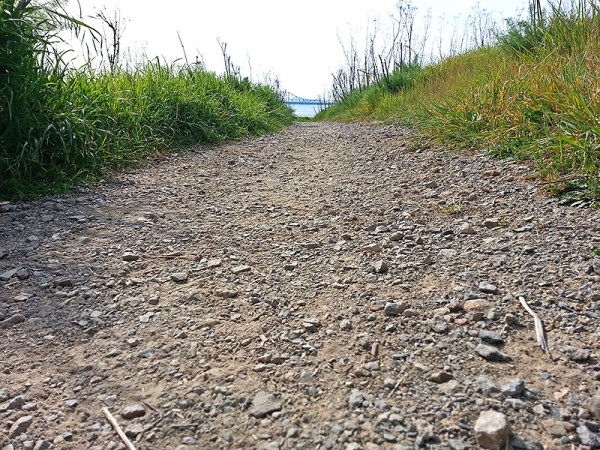
20150304_094610-b

Taken at lower than eyelevel on a trail along the Carquinez Strait

20150321_161349-b

Taken flat on the ground

Second, if you have an articulating LCD screen on your camera,  you can set it so that you can lower your camera at arm’s length or raise your camera at arm’s length to get an extra couple feet for a different angle in your shot. You need to set the articulation, of course, so that you can see the screen while you shoot.

Third. Can you climb on something nearby to get a higher angle shot without being arrested? I don’t advocate jumping on top of someone else’s car, but there may be something nearby that you can climb on safely and get that extra high shot. If you’re doing a well-prepared photo shoot, you can even bring along a stepladder to get a higher shot.

Fourth. Can you find a place where you can get a low shot? I don’t advocate removing manhole covers and climbing down into the sewer to get a street-level shot. But there are plenty of places where you might be able to get significantly downhill from the subject to take a good shot.

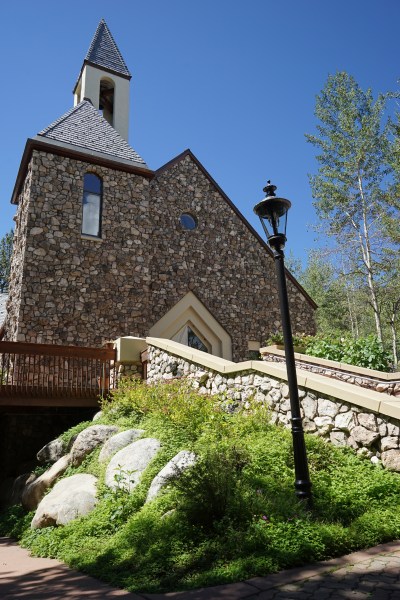
DSC02341-d2

Gerald R. Ford memorial nondominational chapel at Beaver Creek, Colorado

Fifth, along a horizontal plane, you can change your angle by moving right or left. It’s usually standing in front of the subject that might be the least interesting. But with a little energy, you might visit each side of the subject to see whether you can get a good side-angle shot that’s better than a front shot.

Sixth, what about a shot from behind? Maybe shooting the subject head on is not your best photo. Maybe getting behind the subject and shooting will give you a better photo or at least an additional worthwhile photo.

DSC08894-q2

A horse of a different angle

Seventh, think of your subject as having a transparent geodesic dome over it and that you can take a photo from any place on the dome that you can reach safely (e.g., by walking, climbing, or drone).

Eighth, consider all the angles that might bring you some additional interest. For instance, if you consider all the angles, you might come with an angle it has a surprising foreground or background that you had not previously perceived. You might see additional subjects that you can include in your photograph that are otherwise not visible from your original shooting angle.

Ninth, when you find yourself at an unusual angle, take full advantage of it while you can. For instance, if you happen to be driving along the top of a hill, stop and take a look to see if there’s a good photograph to be taken of something below.

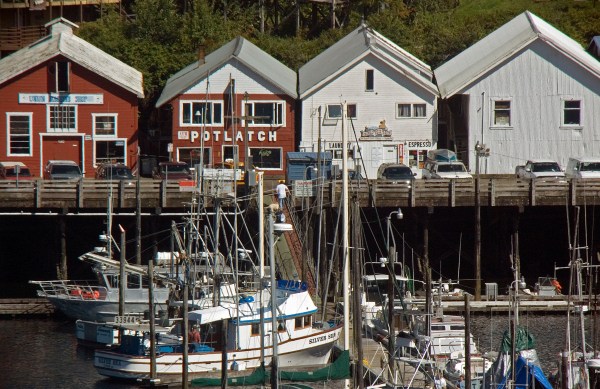
sinclair-1

sinclair-2

Taken from a cruise ship in Alaska 70 feet above the water

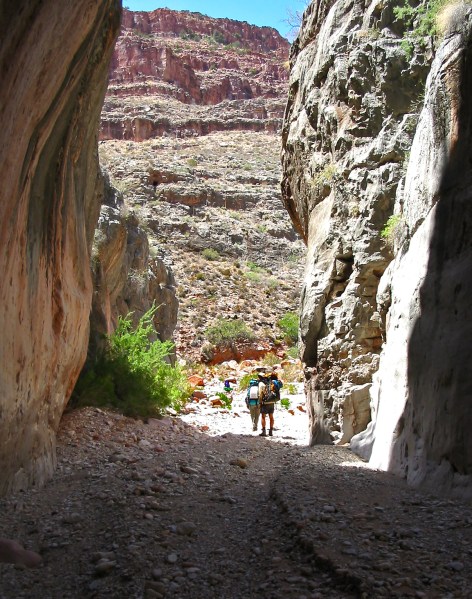
Tenth, dive into the subject (the scene) to look for a photo. I once got to sit in the middle of the Denver Symphony Orchestra while in rehearsal, a great photo-op. For a more pedestrian example, most people go to the Grand Canyon, stand on the rim, and take photos. Sure, you can get some great shots. Never mind the haze in the air from West Coast pollution that’s been there for last 60 years. And when you’re done, you have the same photos that have been on 900 million postcards going back more than a century. But if you take the nearest trail down into the canyon, with each step down you’ll begin to see fantastic photo-ops that you’ve never seen before. It doesn’t matter which trail; you don’t have to go very far; and most of the tourist trails are not difficult. It’s the same world from a different angle. The different angle yields original new images.

Rotation of 100-0096_IMG-d

On a trail in the Grand Canyon below the rim

Finally, think ahead and go prepared. For instance, if you’re going to shoot flowers for several hours and be on your knees much of the time doing so, take along some knee pads. If you going to shoot insects laying on your stomach for a considerable time, take along a blanket to lay on. If you’re going to climb a hill to get a good angle, wear some sturdy shoes or hiking boots.

Cam – Mic – Zoom

by Joseph T Sinclair

For those who haven’t participated in a Zoom meeting yet, it is very compelling. Give it a try. The Club’s Zoom meetings have been great fun. The essence is that video really makes the meetings compelling, but there seem to be many participants without video. I encourage everyone to get a video camera (cam).

Most laptops, tablets, and smartphones have built-in microphones (mics) and cams. If you have a desktop computer (or laptop) without a mic and cam, however, you can purchase USB mics and cams that work well.

Logitech seems to have a monopoly on the high-quality cams, but Logitech is out of stock most of the time (same for Amazon and other vendors). Logitech cams sell on eBay now for 100% to 300% of MSRP, including the used ones. Very old models sell for high prices too. This won’t last forever, but the demand is very high now.

Unbranded cams sell as low as $20 on Amazon. I recommend buying a more expensive one with more features (e.g., $40 to $80). Check the reviews and make sure the delivery date is soon. Many cams come with a built-in mic, particularly the most recent and higher-priced models. Of course, attending a Club Zoom meeting is worth much more than $80.

If you need a mic, there are some good quality USB podcast mics available for $40 to $70 that you can find by googling “best inexpensive microphones for podcasting.” But many less expensive USB mics work well too.

If you want a really sharp video image with a great sound, you will need to spend $100 or more on a Logitech cam, if you can find one that isn’t marked up above MSRP and is available now. But some of the more expensive unbranded cams on Amazon might be high quality too. Of course, Amazon isn’t the only place to buy cams. Most of the places that sell computers and cameras also sell cams.

FYI: Zoom had 10 million daily participants in December 2019. Today it has 300 million daily participants. A Zoom account is free; but more useful Zoom accounts (bigger meetings) cost a monthly fee. You do not have to have a Zoom account to participate in a Zoom meeting. Zoom has been the leader in virtual meetings because it is very easy for participants to use, and it works well.

2020-05-22_8-29-31

April Dark Skies

Spring in the northern hemisphere is the beginning of Milky Way season, when the Galactic Center is above the horizon at night. Although the Milky Way can be photographed anytime of the year when the sky is dark enough, the region around the Galactic Center contains the most detail and so is more photogenic. Spring is also the time when the Milky Way can be seen as a full arch, low enough in the horizon to photograph with some landscape visible. Fortunately, many of us in the Pagosa Springs area live where skies are dark enough that we can photograph the Milky Way without traveling, so it could be a good subject while we are “staying at home”.

In April 2020, opportunities to photograph the Milky Way from Pagosa Springs, without interference from the Moon, begin on the 14th and last into the first couple of days of May. The new moon will be April 22, so the best dark sky conditions and longest time for viewing the Milky Way would be a couple of days on either side of the 22nd. During this period, you could photograph the Milky Way from around 1 a.m. until shortly before dawn, about 4:45 a.m.. For details, see any of a number of apps, such as PhotoPills, Sun Surveyor, or The Photographer’s Ephemeris, desktop programs such as Stellarium. 

Night sky photography isn’t just about the Milky Way. A classic method of photographing the night sky is to make very long exposures which show the motion of the stars as star trails. As with any night scape photography, the best images will also have a strong foreground, perhaps illuminated by the waning moon, low level LED light panels, or by light painting with a flashlight. For tips and references on start trail photography, see this post. 

Also coming up next week is the Lyrid meteor shower, which should be active beginning April 19, and  peak in the predawn hours of April 22 this year. However, you should be able to see some activity of the Lyrid any dark night from April 10 through 23, with up to 10-15 meteors per hour. The Lyrid shower occurs every spring, and if the skies are dark and clear, it can be one of the best meteor showers of the year. Fortunately, with the new moon on the 22nd, there should be excellent viewing of the Lyrids this year. To photograph the Lyrids, all you need is a clear, dark sky, wide angle lens, camera and intervalometer (built in or external) and lots of patience. For an excellent introduction to techniques for photographing meteor showers, see this article by Glenn Randall.

If you are sheltering in place, don’t live in a dark sky area, or just are not into going outside to photograph the Milky Way in the wee hours, here is an indoor activity.  The week of April 19 to 26 has been designated as International Dark Sky Week by the International Dark Sky Association, with the goal of reconnecting people around the world with our night sky. On their website, https://idsw.darksky.org , you can find a variety of virtual presentations that you can watch each day of that week. Topics include the relationship between humans and the night sky through history, basic astronomy, and art and conservation. Some of the presentations are stories about the night sky, appropriate for kids. You can also follow these and other presentations of the IDSA on their Youtube channel.

Happy star gazing!

Gift Photograph

by Joseph T. Sinclair

It seems like a good idea that a fine art photograph makes a good present (Christmas, birthday, wedding, anniversary, or special occasion). But it may not be a good idea without qualifications. Why not?

  1. Most people (except young people just starting their adult lives) don’t have vacant wall space. If you give them a medium-size or large photograph as a present, they may have no wall space to hang it.
  2. Unless you put a frame around it, the recipient may never use it. Framing is expensive.
  3. Art is enjoyed according to taste, which is very personal. The recipient may not appreciate your photographic art.

A photograph that answers the above concerns, however, may be an appropriate gift. And a small metal print answers such concerns.

  1. It’s small. People can always find a place to hang a small print.
  2. It doesn’t need a frame. Thus, it can be less expensive than a framed paper print.
  3. If the recipient doesn’t like it, it’s not a lot of wasted money.

A photograph that you purposely take to be a small photograph (rather than just any photography you shrink down) can be a great photograph. Small is not necessarily lower quality.

Accordingly, giving a fine art photograph as a present isn’t inherently a bad idea. It’s just an idea that requires a little common sense.

DSC01465-d-small