White?

by Joseph T Sinclair

There has been a long-lasting fad of all-white paintings going back many years. These paintings are typically 4 ft x 8 ft or larger. They’re all white. You can find them in some museum collections regardless of the size or prestige of a particular museum. If you want to buy one, they range in price from a few hundred dollars to $30,000.

Fortunately, this fad has come to photography. Not long ago in the Napa Valley, I saw a very large all-white photograph. So, now photographers can take part in this lucrative image industry. The question is, how do you want to do this? Ironically, it may be that you are better off painting such a non-image rather than photographing it.

For example, if you are to make a 4 ft x 8 ft photograph all white, you need to find a clean white flat surface large enough to photograph (or perhaps create it in Photoshop). A metal print that size is going to cost you about $1,200. Or a paper print is going to cost a lot of money too, and you’ll have to mount it on a very large mounting board. Then you’ll need to frame it and perhaps even put glass over it. That pretty quickly adds up to hundreds of dollars of cost. That’s why I say, why not paint it instead? Here are the steps to do so:

  • Buy a 4 ft x 8 ft panel of half-inch plywood with a layer of paper on one side. This is a standard lumber item.
  • Buy a small can of latex glossy white paint.
  • Rent a paint sprayer.
  • Spray-paint the panel white on the paper side. (If you use a brush, viewers will see it’s not a photograph.)
  • Take 3/4 inch by 2-inch wood molding painted white (or gray) and attach it all around the panel for a frame.
  • Attach some wiring on the back for hanging.
  • Sell for up to $30,000.

This is one of the rare artistic cases where painting is easier and less expensive than taking a photograph.

This is going to be a hard sell, however, unless you attach some BS to it to make it valuable. You have an explanation to write and the title to play with.

The explanation takes a little work but is not too difficult. Simply research on Google what other artists have said about their all-white paintings and distill to a similar line of compelling BS.

Titles are more difficult. They take some ingenuity and cultural awareness. But an all-white painting doesn’t have much value without evocative title words. Here are a few suggestions:

Pallor of the Matrix

Nuclear Landscape

Cache of Enlightenment

Samantha’s Anguish

Zachery’s Clean Soul

Cloud Number 17

(I’m sure you can do better than I have.)

There you have it! An easy way to cash in on this long-standing trend. This is the easiest fine art you’ll ever create. But a good title that is currently very trendy will take a lot of reflection. It might be something you want to refer to a focus group. This fine artwork lends itself to easy scaling. (Again, an observation based on a Napa Valley photograph exhibit.) For instance, you can put a thin line across the panel (presumably at the Phi grid line), and the painting becomes a whole different work of art.

Or you can put a thick line, preferably blurry, across the painting in the same way to create an additional great work of fine art. Etc.

Why work hard when you don’t have to? Be forewarned, however, that if you proceed as I have outlined, your spouse and your friends, relatives, and neighbors may think you’re something of a slacker. They may even call you heinous names. But all great artists have endured such accusations, and you should not let that bother you. It’s enough that museum curators and art gallery managers everywhere will applaud your vacuous work. So, the hell with your own people’s scurrilous denunciations.

Current state of AI photography

by Joseph T Sinclair

I have seen plenty of photographs that have been so overbaked in post processing that that they have an otherworldly or fantasy quality to them. Personally, I don’t like such photographs, but they seem to have some popularity with the general public.

Recently, I’ve been playing around with AI photograph generators. It’s my impression that many AI photographs have such qualities.

Another common AI photograph quality is lack of definition. There seem to be too many pieces of the photograph out of focus. Then too, many AI photographs are just botched up (literally). Finally, many AI photographs just don’t look right.

Nevertheless, in some cases the AI generated photographs look real. It’s difficult, if not impossible, to tell that they are not traditional photographs.

The bottom line is that you need to play around with words and make endless experimental runs using different words with the generator to craft the photograph you want. But maybe it’s just easier and more productive to go out and take the picture.

That said, my experience is just a one-off. You need to experiment yourself with AI to see what it can do for you. It’s not going to go away. And in 5 years it will work much better than it does now.

First, you need to distinguish between AI assisted post processing and AI generated photographs. AI assistance is present in many photograph editors now, and it makes the normal thing you do easier and faster.

An AI photograph (image) generator, in contrast, creates a photograph from words you enter into the generator. You process the resulting photograph by changing the words and re-running the AI generator to see what you’ve got until you’ve got what you want. There are numerous AI photograph generators. Try one.

DALL-E 2 (https://openai.com/product/dall-e-2)

Microsoft (https://www.bing.com/images/create?)

Adobe (https://www.adobe.com/sensei/generative-ai/firefly.html)

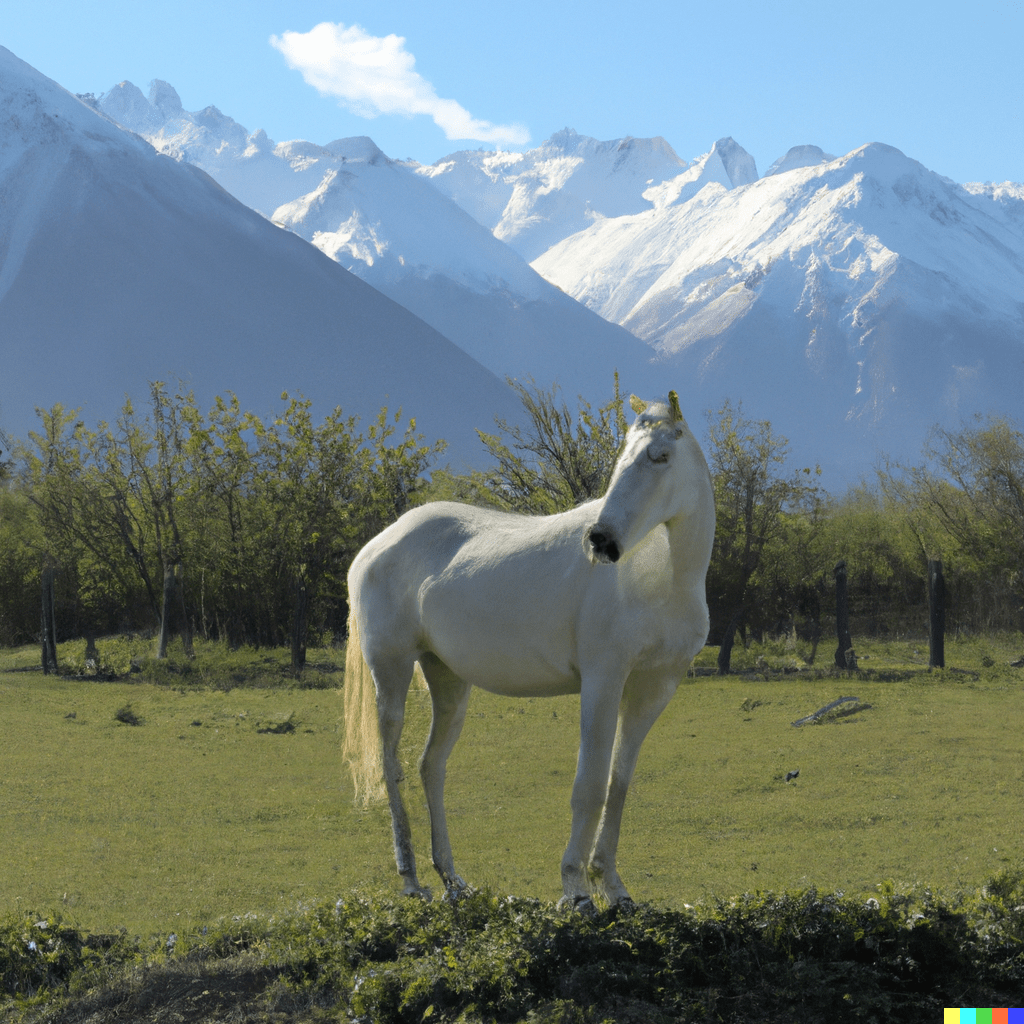
AI: white horse green pasture snow mountains [DALL-E 2 photography]
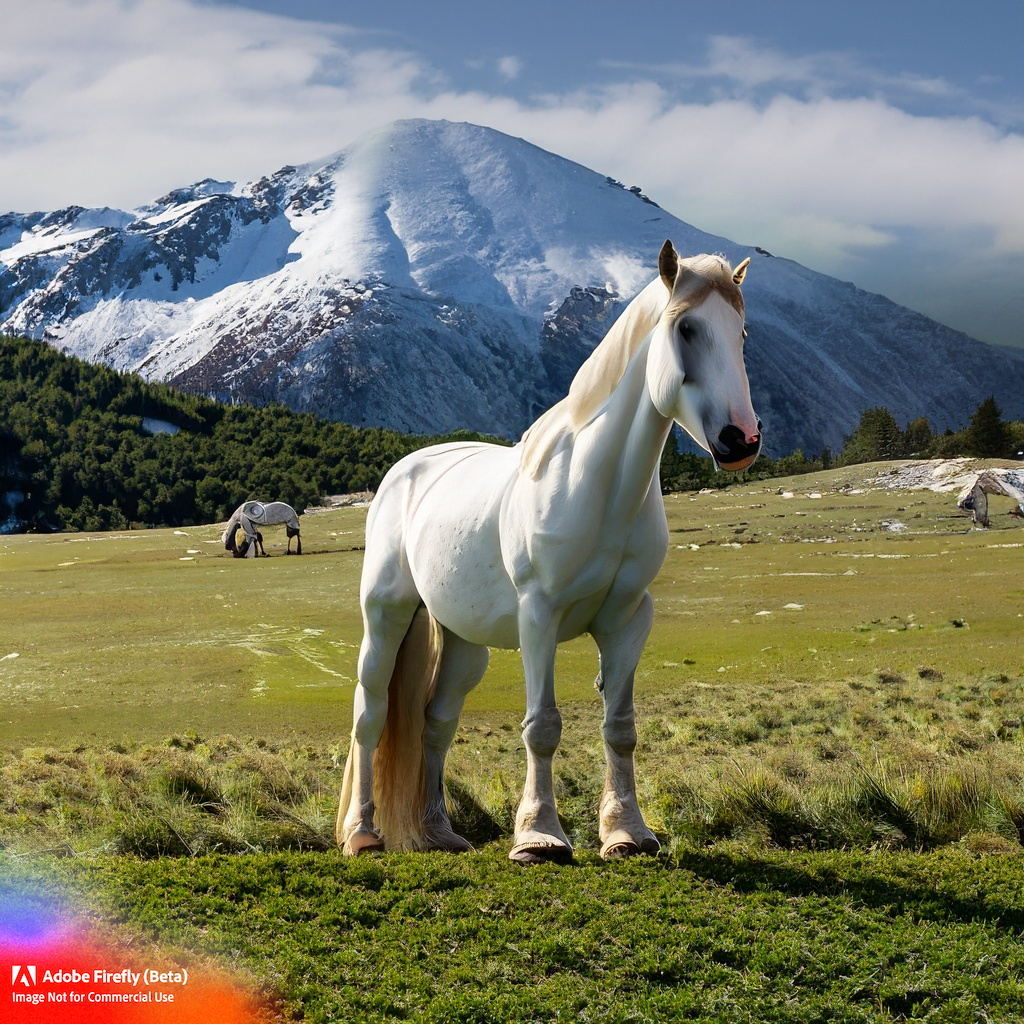
AI: white horse green pasture snow mountains [Adobe photography]
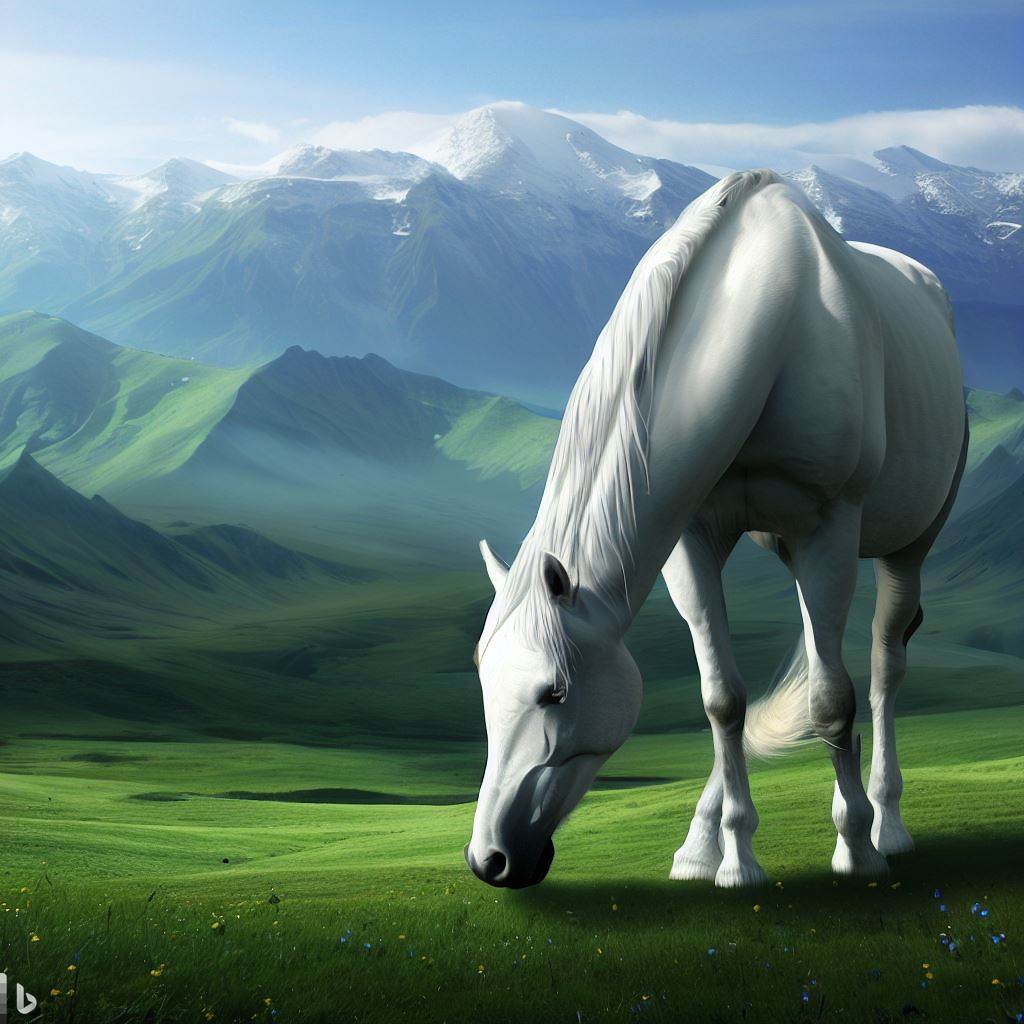
AI: white horse green pasture snow mountains [Microsoft photography]

See what you think. AI generated photographs may be adequate for many situations. But in my opinion, AI generation is currently not useable for aesthetic, realistic, color photographs; that is, the type of photographs that most of us strive for.

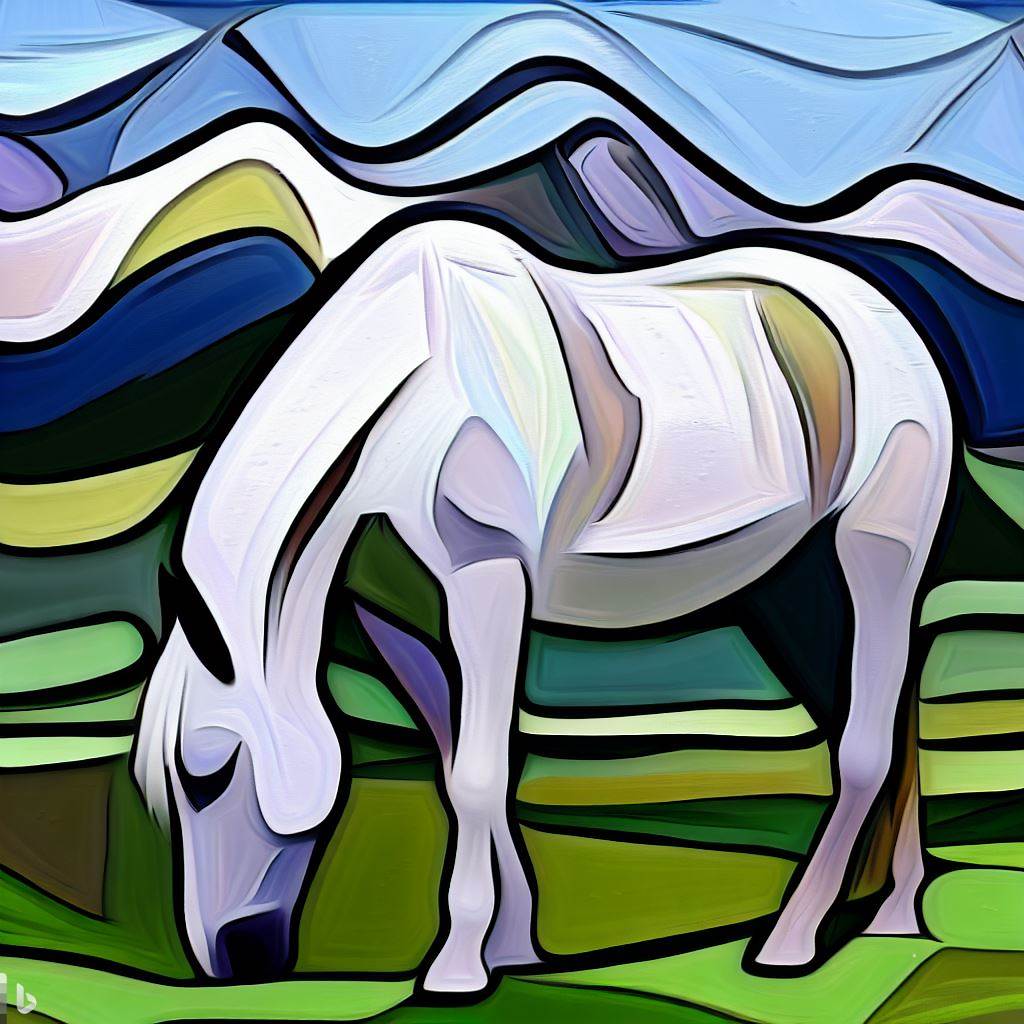
Nonetheless, AI generation can be useful for turning photographs into impressionist art or abstract art and for comparable processes.

Picasso style AI image of the white horse above (Micrpsoft)
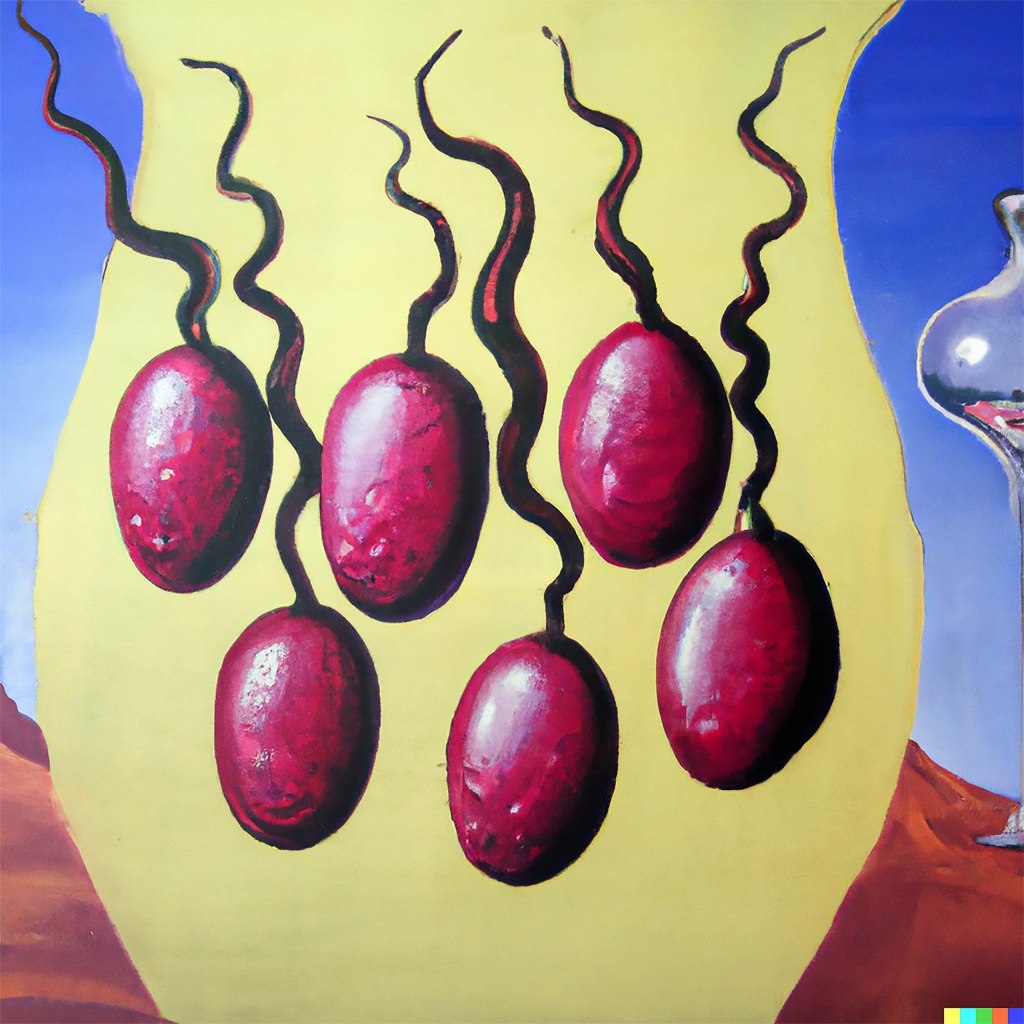
AI: a image of fermenting wine grapes painted by salvador dali acrylic paint [by Dean Busquaert]
AI is the new parlor game
I found myself with three other retired people after dinner. They all had their noses in their phones. They were making AI images, AI poetry, AI songs, and AI videos and then presenting the results to each other. The results were not particularly appealing, in fact boooring. Rudely, I dozed off until my spouse kicked me awake, and I had to pay polite attention. Of course, you know if AI is already a parlor game that it’s also well entrenched in internet platforms. YouTube, I’m guessing, has more AI video than the rest of the digital world combined.

Finally, you need to understand the combination of AI assisted post processing and AI generated images. Software such as Adobe’s Firefly incorporated into Photoshop (beta – moderate learning curve) enables you to easily apply complex processes to your photographs but to add AI imaging as well. In any case, this is a path to endless fiddling around.

Not only is this powerful digital technology but apparently Adobe is doubling the price of Photoshop (or maybe there will be two versions of Photoshop, one without AI generation).

AI is a technique for which you need to know the capabilities and limitations to determine how you might use it. Maybe a parlor game after dinner is the avenue to knowledge after all?

July Presentation: “Learning to See Creatively”

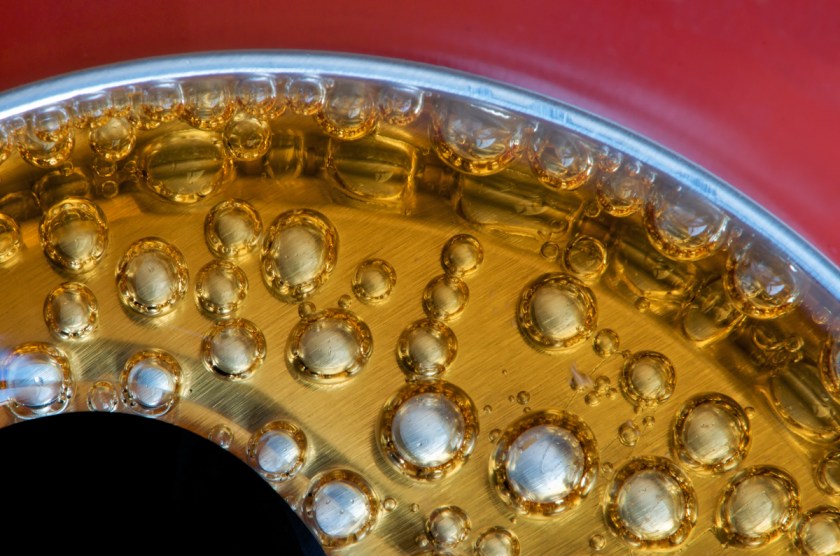
soda bubbles, © Greg Holden

The July meeting of the Pagosa Springs Photography Club will be held on Wednesday, July 12, 6:00 p.m., at the Community United Methodist Church, 434 Lewis Street in Pagosa Springs. Our speaker this month will be Greg Holden. Greg’s topic will be Learning to See Creatively.  

Greg Holden is a photographer from Longmont, Co who uses his photography to share with others how he sees the world. He enjoys creative photos of little scenes often overlooked by others rather than postcard landscapes. He often explores abandoned places and captures the details of the layers of paint and rust on a discarded automobile.  Greg enjoys teaching others and sharing his passion for photography and speaks around his home in the greater Denver area, but also continues to speak and judge virtually, at clubs throughout his former home in the MD and VA areas. You can see Greg’s work on his website imagesunderfoot.com .

In his presentation, Greg will discuss his approach for finding different viewpoints in common scenes and how he creates interesting abstract images by isolating a part of a scene.  Whether it is iPhone photos taken in his kitchen or DSLR images from local parks, Greg’s photos will demonstrate that you do not have to travel to exotic locations or spend hours using software manipulation to make creative images.

Our meeting will begin at 6 p.m. with socializing, and the program will begin at 6:30 p.m. This will be a hybrid meeting, also available on Zoom. The Zoom link will be emailed to members; others who wish to attend may request the link by email to abutler@mac.com. Photography Club meetings are open to the public.

The Pagosa Springs Photography Club promotes educational, social and fun interactions between all who enjoy making and viewing great photography. The club sponsors educational programs and outings to help photographers hone their skills.   We welcome photographers of all skill levels. Dues for 2023 are just $25 ($35 family). For more information about the club, and to download a membership application, visit our website at https://pagosaspringsphotoclub.org/about/ .

Controlling Time in Photography

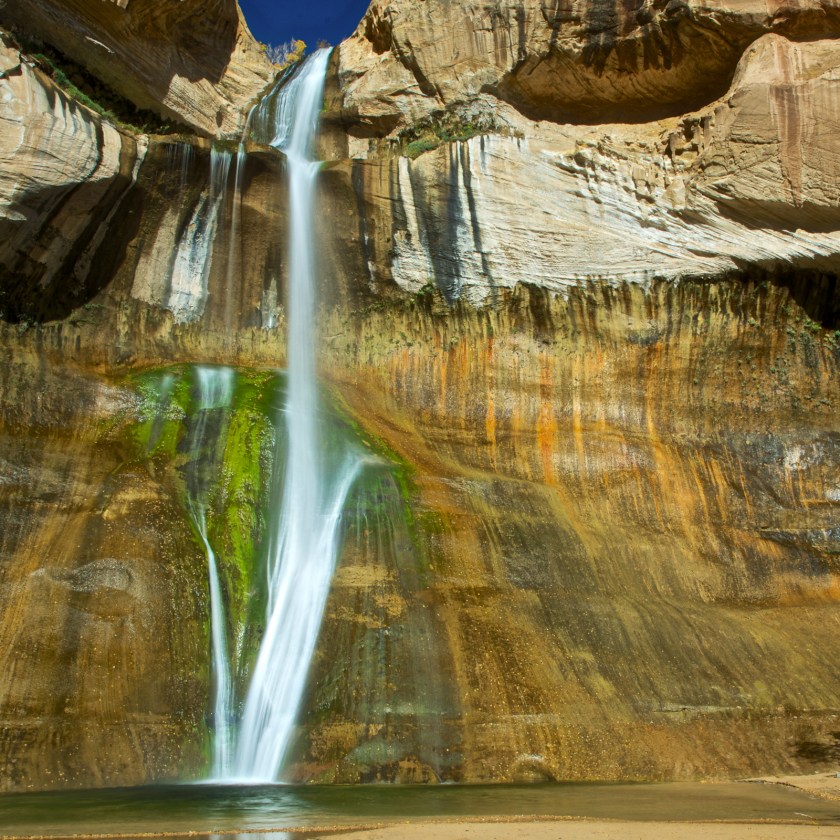
Lower Calf Creek Falls. A slow shutter speed was used to convey the motion of the falling water © Andy Butler

The June Photography Club meeting will be held on Wednesday, June 14, 6:00 p.m., at the Community United Methodist Church, 434 Lewis Street in Pagosa Springs. Our topic this month is Controlling Time: Creative Use of Shutter Speed in Photography. We will watch and discuss a video by National Geographic photographer Joel Sartore on how to use different shutter speeds to create a variety of moods in your photos. Do you want to freeze action with a very high shutter speed, or use a low shutter speed to depict movement? There are many creative choices possible. This will be a hybrid meeting, also available on Zoom. Club members will receive the Zoom link by email. If attending in person, arrive any time after 6 p.m. for socializing, the actual program, and Zoom, will begin at 6:30 p.m.

Club members may bring up to five images on a flash drive to share and discuss with the group following the presentation. As a reminder, submitted images should be JPEG (JPG) format. Resize to about 2000 pixels in the longest dimension.

The Pagosa Springs Photography Club promotes educational, social and fun interactions between all who enjoy making and viewing great photography.  The club sponsors educational programs and outings to help photographers hone their skills.  The Photography Club welcomes photographers of all skill levels. Dues for 2023 are just $25 ($35 family). For more information about the club, and to download a membership application, visit our website at https://pagosaspringsphotoclub.org/about/ .

Photographing Brazil

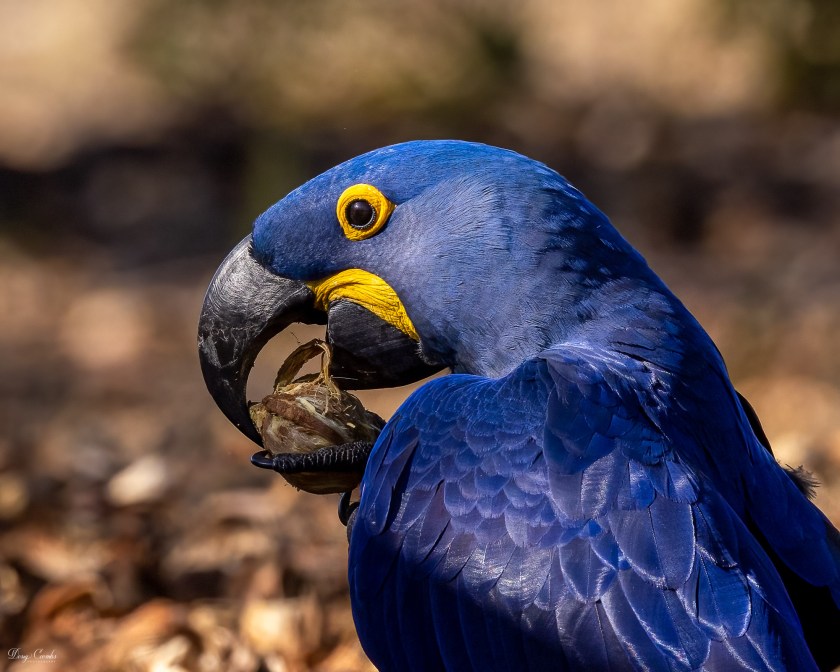
Hyacinth Macaw
Haycinth Macaw, Parnaiba Headwaters NP, Brazil, © Doug Coombs

The May meeting of the Pagosa Springs Photography Club will be held on Wednesday, May 10, 6:00 p.m., at the Community United Methodist Church, 434 Lewis Street in Pagosa Springs. Our topic this month is Photographing Brazil, presented by Pagosa Springs photographer Doug Coombs

In the summer of 2022 Doug Coombs, his wife Miyuki, and friends from the Los Alamos, New Mexico Photography Club took a 30+ day trip to Brazil to photograph birds, mammals, waterways, indigenous people, and some cityscapes. They visited five different venues including Cristalino Reserve in the southern section of the Brazilian Amazon, Emas National Park, Parnaiba Headwaters National Park, Rio de Janeiro and the Atlantic Rainforest nearby, and a seven night cruise on the Rio Negro and some of its tributaries, which are all tributaries of the Amazon. Doug will share and discuss photos from these sites in his presentation.

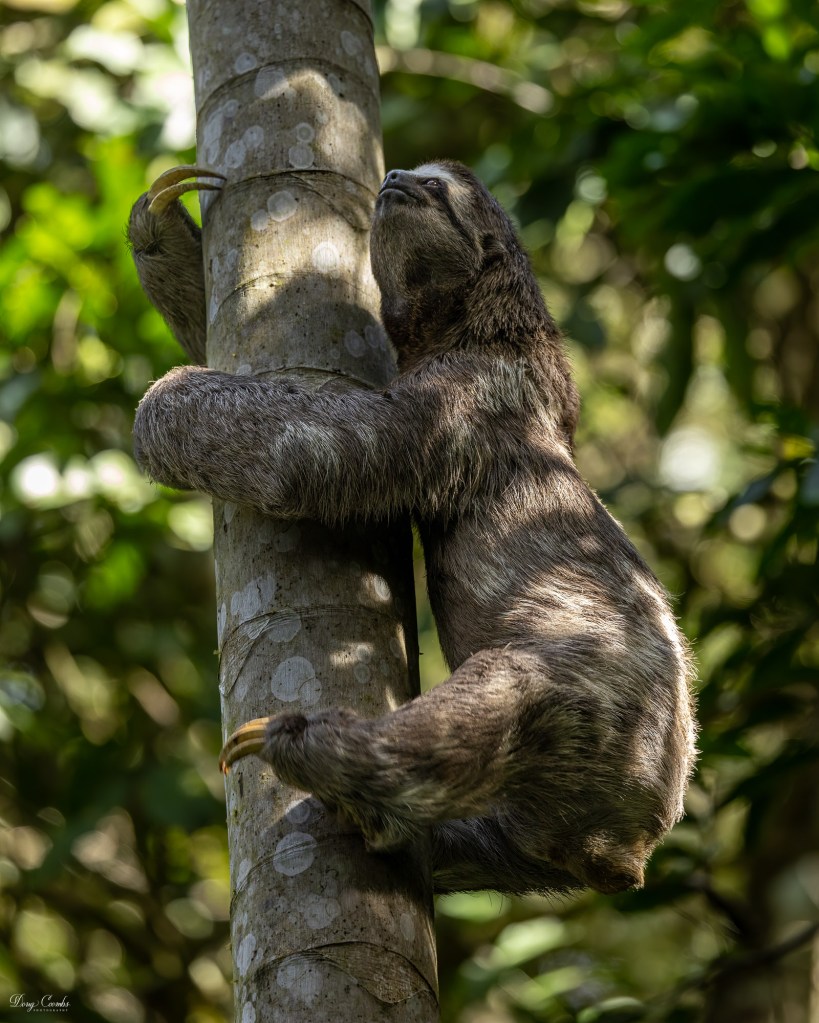
Three-toed Sloth
Three-toed Sloth, Atlantic Rainforest, Brazil. © Doug Coombs

Doug Coombs is a Pagosa Springs based photographer specializing in landscapes, birds, and other wildlife. He is also a member of the Pagosa Springs Photography Club. To see more of his images, visit Doug’s website at https://www.dougsview.com .

Our meeting will begin at 6 p.m. with socializing, and the program will begin at 6:30 p.m. This will be a hybrid meeting, also available on Zoom. The Zoom link will be emailed to members; others who wish to attend may request the link by email to abutler@mac.com. Photography Club meetings are open to the public.

The Pagosa Springs Photography Club promotes educational, social and fun interactions between all who enjoy making and viewing great photography. The club sponsors educational programs and photography outings to help members hone their skills.   We welcome photographers of all skill levels. Dues for 2023 are just $25 ($35 family). For more information about the club, and to download a membership application, visit our website at https://pagosaspringsphotoclub.org/about/ .

Pandas & Conservation Photography, April 12

Giant Panda on 2 Tree Trunks, © Katherine Feng

The April meeting of the Pagosa Springs Photography Club will be held on Wednesday, April 12, 6:30 p.m., at the Community United Methodist Church, 434 Lewis Street in Pagosa Springs. Our speaker this month is Katherine Feng. Katherine’s presentation will be on Using Conservation Photography to Help Save Endangered Species

Katherine Feng is a retired veterinarian who devotes her photography to protecting China’s endangered species and their habitat.  Katherine is a Senior Fellow of the prestigious International League of Conservation Photography.  

Katherine spent 6-9 months a year for 4-1/2 years in China’s Wolong Nature Reserve documenting the work of staff and researchers to save the giant pandas from extinction.  Her images have been published internationally in calendars, books, National Geographic, Paris Match and numerous conservation magazines. Her giant panda images are featured in the children’s book, Panda Kindergarten.

Waving Panda, © Katherine Feng

Katherine will present a program on how she approaches conservation photography to educate the public about wildlife, their habitat and people’s efforts to protect them.  She works closely with the different nature reserves in China where she donates her images for conservation purposes.

Katherine’s presentation will feature photos of China’s giant and lesser pandas as well as the lesser-known snub-nosed monkeys and the critically endangered black-crested gibbons and white-headed langurs. The presentation will also be available by Zoom; for Zoom information contact Andy Butler at abutler@mac.com

The Pagosa Springs Photography Club sponsors educational programs and outings to help photographers develop their skills. Photography Club members learn from one another and build their networks. The Club welcomes photographers of all skill levels. Dues for 2023 are just $25 ($35 family). For more information about the club, and to download a membership application, visit our website at https://pagosaspringsphotoclub.org/about/ .