The next meeting of the Pagosa Springs Photography Club will be held on Wednesday, February 8, 6:30 p.m., at the Community United Methodist Church, 434 Lewis Street in Pagosa Springs. Our topic this month is Using the Color and Intensity of Light to Enhance Images. The presentation will be a video on the subject by National Geographic photographer Joel Sartore. This will be a hybrid meeting, also available on Zoom. The Zoom link will be emailed to members; others who wish to attend may request the link by email to abutler@mac.com. If attending in person, feel free to arrive any time after 6 p.m. for socializing; the actual presentation will begin at 6:30 p.m., MST.
For our program, we will watch and discuss a video by National Geographic photographer Joel Sartore about the Color and Intensity of Light, and how these characteristics can be used to establish mood and enhance the overall composition of your images.
Club members may bring up to five images on a flash drive to share and discuss with the group following the presentation. As a reminder, submitted images should be JPEG (JPG) format. Resize to about 2000 pixels in the longest dimension.
The Pagosa Springs Photography Club promotes educational, social and fun interactions between all who enjoy making and viewing great photography. The club sponsors educational programs and outings to help photographers hone their skills. The Photography Club’s membership year begins in January. We welcome photographers of all skill levels. Dues for 2023 are just $25 ($35 family). For more information about the club, and to download a membership application, visit our website at https://pagosaspringsphotoclub.org/about/ .
I was in Grand Gulch, Utah on a backpack trip and ran across a lama tour for photographers. (The lamas hauled the camping and photography equipment.) I talked to one of the photographers from London who had a gallery where he sells images of the US Southwest. He was photographing the Anasazi ruins with a large-format view camera. He told me that he took only one shot of any subject but that he was very careful in taking the shot. And he normally took up to two hours in setting up the shot.
Maybe that works, although occasionally he must get an unusable shot. And when he does, it’s inconvenient to return to Grand Gulch from London to get a replacement shot. But for most artists who are photographers, that’s not a normally smart or efficient way of producing art. Indeed, just the opposite is true; keep shooting until you can’t stand up any longer. Well, maybe that’s an exaggeration. But shooting lots and lots of shots is a time-honored photographic technique that most fine-art photographers use routinely.
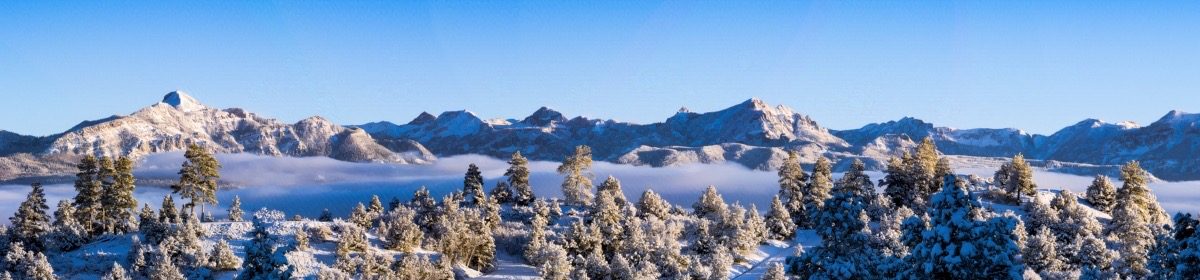
After Glow – Best of 22 shots
Even those iconic photographs taken on the spur of the moment within a window of opportunity only a few seconds or minutes long are the usually the result of taking multiple shots. For the above photograph, I walked out the door and saw a brilliant sunset. By the time I hurried inside, got my camera, and ran out the door to a good place to take a photograph (about 2 minutes), the brilliance was gone, unfortunately. But with 22 shots (over about 3 minutes) I was able to capture a useable remanent of the spectacular sunset.
I’m not saying that careful photography is not de rigueur. Of course, it is. But multiple careful shots are more productive of good photography. For instance, have you ever taken a photograph of someone outside that turned out to be the perfect photograph; but in postprocessing the subject turned out to have a tree branch growing out of their ear? In an uncontrolled environment (most photography), unless you take an inordinate amount of time setting up a shot, you take a substantial risk of ending up with a shot that’s not usable. And long setups are just not practical much of the time.
Try using a mental checklist for each photograph. You can do it in less than a minute; and you can take a lot of shots and still be careful.
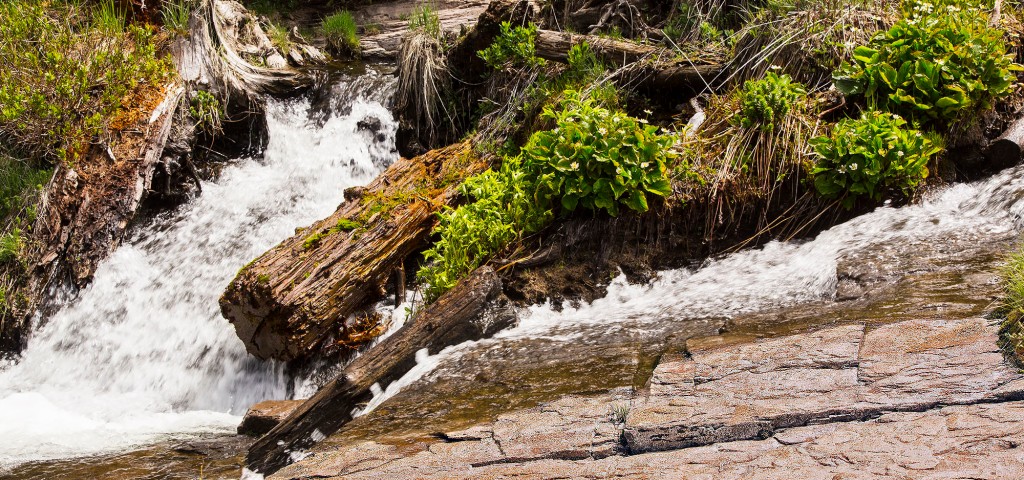
Of course, stationary objects where the light is not changing very quickly are more susceptible to generous amounts of time spent being careful. For the following photograph, I had plenty of time to shoot. So, I shot 24 photographs to be sure I got the photograph I wanted.
Creek Garden – Best of 24 shots
Then there is the shooting situation. If you are with someone else (hiking, traveling, exploring, etc), invariably you don’t have the time to take carefully executed shots. You need to keep up with the group or person you’re with. Thus, taking multiple shots is your best bet of getting the photograph you envision.
Even during the years of film, professional photographers used lots of rolls of film to insure they got the shots they wanted. On a photo field trip, the difference between an amateur and professional photographer was typically that the amateur brought along three rolls of film and the professional brought thirteen. Today with virtually unlimited cheap digital storage, there is no reason not to use this valuable technique. Just shoot a lot of photographs.
Of course, each shot should be not only careful, but each shot should be a little different. Change the exposure, angle, framing, or depth of field an increment for each shot. In other words, bracket the photo op with a lot of incremental shots. You are more likely to get what you want (to satisfy your vision of the photograph to be taken). And you will substantially reduce the risk of a missed opportunity.
Finally, what about the great photograph you take inadvertently? It doesn’t happen very often for me. But it happens more often when I take more shots.
One of many carelessly snapped shots turned out to be pretty good
I try to take a lot of photographs, often to the delay of the group or person I’m with. And when I’m alone, I take shots until the tedium becomes unbearable. I have never felt I took too many shots. I have often felt I didn’t take enough; that is, I couldn’t get the photograph I envisioned. So, my advice to myself is to take even more photographs in every situation.
What’s the downside? Well, you may have a bigger editing job. But do you really? Let’s say you take a dozen photographs of a subject. You know what your vision is of what the photograph should be. If you have captured your vision, you can quickly pick it out from a dozen photographs. If you haven’t captured your vision, you will also know quickly.
If you haven’t captured your vision, the editing process becomes more difficult. You need to evaluate whether one of those dozen photographs can be manipulated in post processing to match your vision. But just the fact that you may be able to correct your deficiency in post processing is a benefit of generous shooting.
There are plenty of other benefits to shooting lots of shots. But let’s keep it simple. Suffice to say that shooting lots of shots has been a technique that has separated professionals from amateurs for many decades, and it continues in the new digital age.
The Pagosa Springs Photography Club will meett on Wednesday, January 11, 6:30 p.m.,at the Community United Methodist Church, 434 Lewis Street in Pagosa Springs. This will be a hybrid meeting, also available on Zoom. The Zoom link will be emailed to members; others who wish to attend may request the link by email to abutler@mac.com . If attending in person, feel free to arrive any time after 6 p.m.; the actual meeting will begin at 6:30 p.m., MST.
Our January program will be Top Ten: Show and Tell. Members are requested to bring up to ten of their photographs taken in 2022 for discussion. These might be what you consider your best, your most interesting, or your most challenging photos of the year. This is a good exercise in choosing your best images of the year. Be prepared to discuss what you like or might improve about the photos. The goal is to inspire Club members through a conversation about what makes good images, including aspects such as composition, impact, and technical quality. This will be a more extensive discussion than what we typically have during our image share sessions (which we won’t do this month). Please bring your images to the meeting on a flash drive, or (if attending by Zoom) email them by the evening of January 11 to abutler@mac.com.
Did you get a new camera or lens for Christmas? What better way to learn more about photography and get tips on your gear than by joining the Photography Club! The Pagosa Springs Photography Club promotes educational, social and fun interactions between all who enjoy making and viewing great photography. The club sponsors educational programs and outings to help photographers hone their skills and learn from each other. The Club’s membership year begins in January. Dues remain at $25 this year ($35 family). The membership form may be downloaded and mailed in with your payment (instructions are on the form) or brought to a Club meeting.



 Pagosa Springs Photography Club