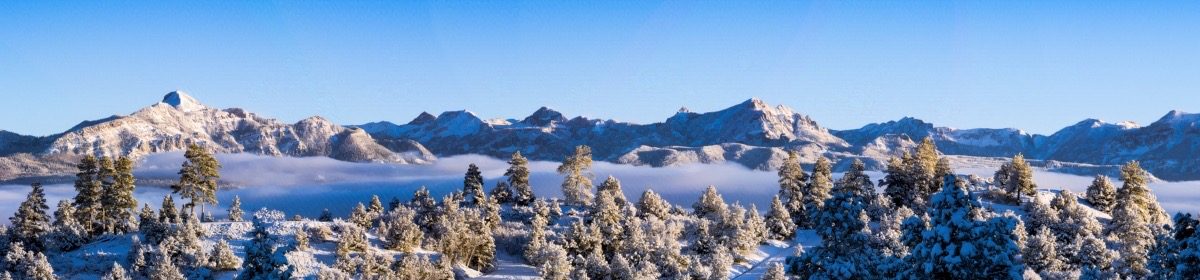
March is a transition month. Here in the Northern Hemisphere, the long dark nights of Winter are quickly giving way to longer days. Night sky photographers can look forward to the reappearance of the Milky Way core in March. But there are other potential events worthy of photographing, or just viewing, in the early Spring night sky.
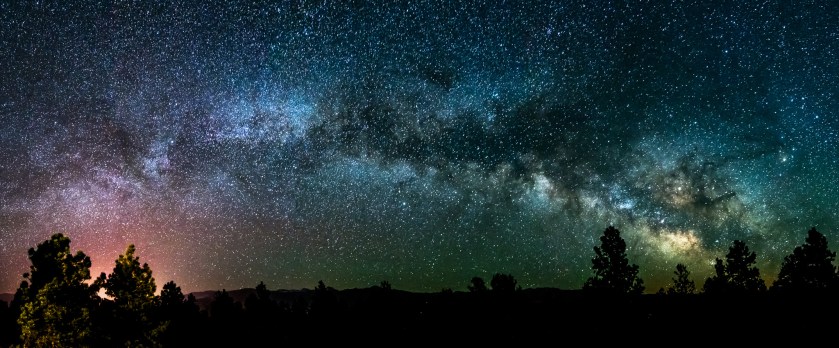
First though, the Milky Way. While our home galaxy is visible year round, beginning in March, the Galactic Center, the Milky Way “core” will be visible. This is perhaps the most dramatic and photogenic portion of our galaxy. The first prerequisite for good Milky Way viewing is a relatively dark sky, so we will need to wait until the recent Full Snow Moon wanes. Starting March 8, there will be periods in which the Galactic Center will be above the horizon with no moon interference in the early morning hours. Best viewing should be from March 9 through the 23rd, when the core will be visible in the hours before dawn. On the night of the new moon, March 13, the viewing time will be from about 2:39 until 4:54 AM (the beginning of astronomical dawn). After the switch to daylight savings time on the 14th, this window moves to 3:35 to 5:53 AM, which somehow seems a bit less onerous. The reward for early risers in Pagosa Springs will be a view of the Milky Way arching over the South San Juan Mountains. Spring is the best time of the year to see the full arc of the Milky Way, and in early spring it will be lower in the sky, allowing for better images of the landscape beneath the arc.
There are other opportunities among the planets, and the stars. In the predawn hours of March 6 (and a few days before and after) is a good opportunity to see Mercury as it will reach its greatest western elongation from the sun. At about 5:25, Mercury will rise in the east and reach about 12° above the horizon before fading in the brightening sky. But it gets better, as Mercury will be within about a degree of the gas giant, Jupiter, and nicely aligned with Saturn as well. By March 9, Mercury will be much closer to the horizon (and more difficult to find), but Jupiter and Saturn will be joined by a young crescent moon. These will be close enough to the horizon to afford good nightscape opportunities.
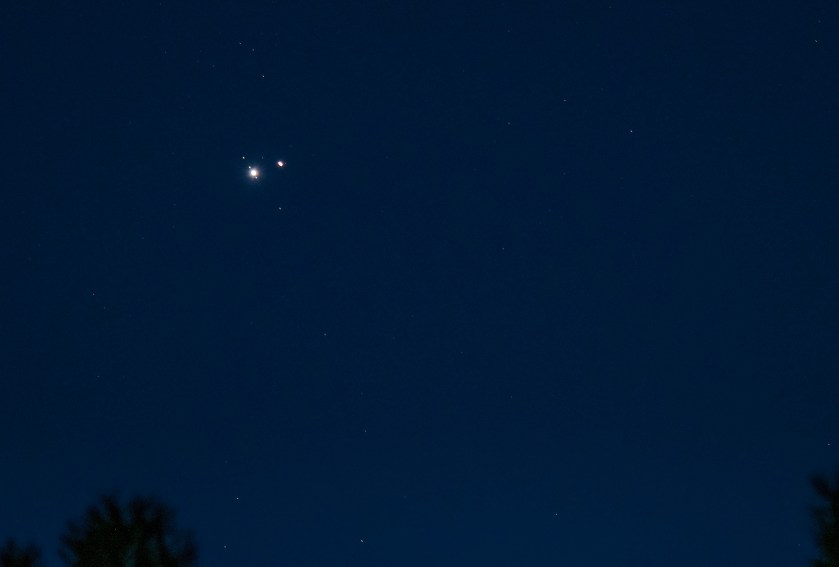
Meanwhile, Mars will be much higher in the sky, but will be quite close to the Pleiades open cluster in the evening sky.
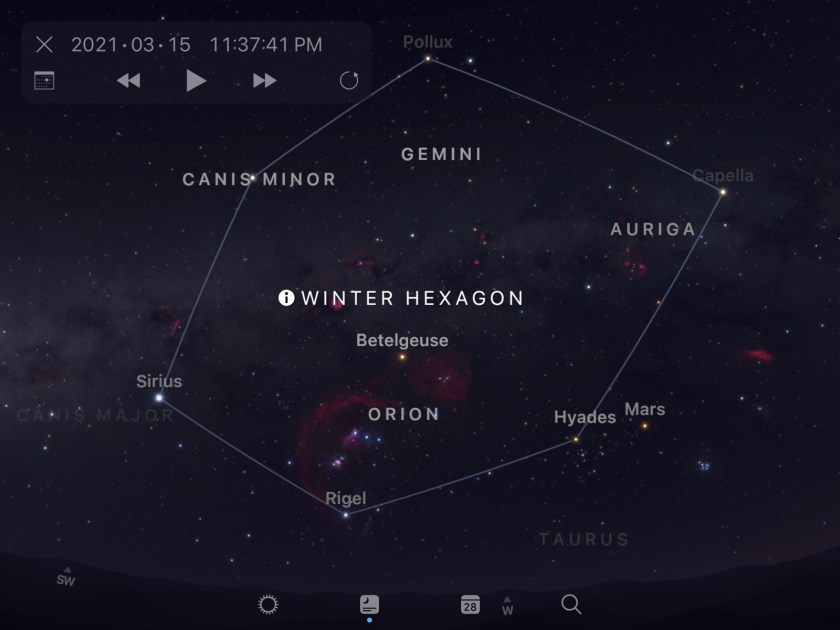
As winter turns to spring, so the winter constellations will gradually disappear. But in the late evenings of March, you can still find Orion and other familiar winter constellations. Look to the west a little before midnight, and Orion, and the bright star Sirius of Canis Major, will be low enough over the horizon to the west-southwest for nightscape photography. You might also look for the Winter Hexagon, featuring Sirius, Rigel , the Hyades, Capella, Pollux and Procyon in Canis Minor.
Finally, moonless evenings in early spring are the best time of the year to see zodiacal light in the Northern Hemisphere. Zodiacal light looks like a hazy triangle in the west, as darkness falls. Look for it along the path of the ecliptic. Find out more about zodiacal light at https://earthsky.org/tonight/zodiacal-light-is-glowing-pyramid-in-west-after-dark . By the way, I recommend EarthSky as a great website to keep up with heavenly happenings. To predict the locations of stars and planets, there are several great programs, including the free Stellarium, or apps such as Star Walk or Sky Guide for smart phones.
Beyond the beginnings of “Milky Way season”, March skies have a lot to offer. Good viewing to you!

 Pagosa Springs Photography Club